TIMES, TIME, AND HALF A TIME. A HISTORY OF THE NEW MILLENNIUM.

Comments on a cultural reality between past and future.

This blog describes Metatime in the Posthuman experience, drawn from Sir Isaac Newton's secret work on the future end of times, a tract in which he described Histories of Things to Come. His hidden papers on the occult were auctioned to two private buyers in 1936 at Sotheby's, but were not available for public research until the 1990s.


Friday, December 12, 2014

Look Skyward: The Geminids


Image Source: Space.com.

The nights of 12-14 December 2014 will see the height of the Geminid meteor shower, a brilliant display from an extinct comet, named for the son of the ancient Greek sun god. For a complete worldwide guide on watching these falling stars, go here.

A Geminid fireball over the Mojave Desert (2009) &copy: Wally Pacholka. Image Source: AstroPics / TWAN via Scibuff.

To see the meteors, look for the easy-to-spot constellation of Orion. The constellation of the twins, Gemini, is nearby, to the left of Orion. The meteors appear to originate from Gemini. The shower is known for its slow moving meteors and exciting fireballs. Space.com: "If you have not seen a mighty Geminid fireball arcing gracefully across an expanse of sky, then you have not seen a meteor," note astronomers David Levy and Stephen Edberg." NASA:
Geminids are pieces of debris from an object called 3200 Phaethon. Long thought to be an asteroid, Phaethon is now classified as an extinct comet. Basically it is the rocky skeleton of a comet that lost its ice after too many close encounters with the sun. Earth runs into a stream of debris from 3200 Phaethon every year in mid-December, causing meteors to fly from the constellation Gemini. ...

On Dec. 13, Cooke and a team of astronomers from Marshall Space Flight Center will host an overnight NASA web chat from 10 p.m. to 2 a.m. CST, answering questions about the Geminid meteor shower. The Geminids are expected to peak just before dawn on Dec. 14, with a predicted peak rate of 100 to 120 meteors per hour.

To join the webchat on Dec. 13, log into the chat page at: http://www.nasa.gov/connect/chat/geminids_2014.html

A few minutes before the chat, a chat window will be active at the bottom of the page.

In addition, a Ustream feed from a telescope at Marshall will be available: http://www.ustream.tv/channel/nasa-msfc
Space.com:
Even if you can't see the meteor display from your part of the world, you can watch them online. The online Slooh Community Observatory will host a live webcast of the Geminid meteor display on Saturday night beginning at 8 p.m. EST (0100 Dec. 14 GMT). You can also watch the Slooh webcast directly: http://live.slooh.com/. NASA meteor expert Bill Cooke will also host a live Geminids webchat on Saturday night from 11 p.m. to 3 a.m. EST (0400 to 0800 GMT), as well as a live webcast.

You can watch the webcasts of the Geminid shower live on Space.com, starting at 8 p.m. EST, courtesy of Slooh and NASA. The Italy-based Virtual Telescope Project will also host a Geminds webcast, beginning at 9 p.m. EST (0200 GMT).

Although the bright moon will be high in the sky by 11:30 p.m. local time Saturday (Dec. 13) (during the shower's peak), skywatchers can still catch a potentially incredible show before the moon creeps above the horizon, washing out the sky. Stargazers might be able to see an average of one or two Geminid meteors per minute Saturday before the moon rises.

By around 9 p.m., the constellation Gemini — the part of the sky where the meteors seem to emanate from — will have climbed more than one-third of the way up from the horizon. Meteor sightings should begin to really increase noticeably thereafter.
Be ready to make a wish!

See all my posts on Astronomy.

Monday, December 8, 2014

Mars Colonizers and the Secrets of the Universe


Image Source: BBC.

Space exploration will tell us the secrets of the universe. This is because space exploration is a synthetic act. It demands a united vision from, and intense cooperation among, diverse experts. It will require a Millennial convergence of many fields of research and knowledge, which have been divided and sequestered through overspecialization over the past two hundred years. No matter the focus - from cryptocurrencies to the relationship between anti-ageing and cancer - every area of human endeavour and study seems set for epiphany. We are coming from many different paths to a higher consensus of understanding which we cannot yet see.

Thursday, November 27, 2014

The Cultural Footprint of Jodorowsky's Dune


Image Source: Amazing Stories.

For every generation, there is a window of opportunity to create what Chilean director Alejandro Jodorowsky's son Brontis called, "a dreamed life." This is the Beautiful Alternative, the path not followed, the epitome of achievement not attained due to failure, impediments, lack of resources or similar circumstances. In cinema, Jodorowsky's 1970s' adaptation of Frank Herbert's Dune (1965) is considered by director Richard Stanley as "the greatest movie never made." A 2013 documentary on the subject argues that, at a critical time in the 1970s, this film marked the dividing line between what really matters artistically and real world limitations. And the fact that this particular film was not made because of monetary problems, and the unwillingness of the studios to bring such a radical vision to popular audiences, changed Hollywood and the entertainment industry forever.

Thursday, November 20, 2014

Tomb of a Sleeping Queen?


Image Source: AP via National Geographic.

From Marie Antoinette, a modern Austrian princess, we go back through time to another queen, Olympias. We go back through Austria, or Österreich (the 'Eastern Reich,' the modern remnant of the Eastern Roman Empire), and before Rome, back to Greece. In Greece, archaeological circles are buzzing about a newly-discovered burial chamber from the time of Alexander the Great (Hat tip: Graham Hancock). It is 2,300 years old and is the largest ancient tomb in northern Greece.

The burial mound stands near ancient Amphipolis, 600 kilometers (370 miles) north of Athens. The tomb inside the mound is massive, marble-walled and ornately decorated, and must house the body of a royal personage, perhaps Alexander's mother or wife.

It is unlikely to be the tomb of the famous king himself, whose grave is lost somewhere in Egypt - another mystery waiting to be solved. The site is dated after his death, in the latter quarter of the 4th century BC, approximately between 325 and 300 BCE. Alexander died in 323 BCE. A member of the Argead dynasty ('from Argos'), Wiki describes him simply: "The most notable ancient Greek King and one of the most celebrated strategists and rulers of all time. Alexander at the top of his reign was simultaneously King of Macedonia, Pharaoh of Egypt, King of Persia and King of Asia." Because of his blinding legacy, still evident today, Alexander's impact arguably surpasses that of any other leader of the ancient world, including the Persian kings, the Egyptian pharaohs, and successive Roman emperors. Unsurprisingly, that interpretation is disputed by modern Iranian scholars. Legacies aside, the tomb dates from ancient Greece's highest moment of glory and power before the flowering of a multicultural Hellenistic imperial culture, which eventually led to the emergence of the Roman Empire after the Battle of Actium in 31 BCE.

Monday, November 17, 2014

Marie Antoinette's Millennial Rococo


Image Source © Cathy Fitzgerald via etsy.

The Internet has made history ahistorical, a treasure box for post-Postmodern plunder. Globalization allows designers to create a crazy quilt of anachronistic, cross-cultural references. Even as traditions are upended, they gain new life. For example, the world has never been more republican, but royal families survive as minor celebrities. There is also a subculture devoted to some royals who have achieved historical dead movie star status.

Image Source: etsy.

Popular history of these dead stars survives in role-playing clubs and historical reenactment communities, fueled by the Internet. The craft merchant site Etsy gives a snapshot of the cult around Marie Antoinette.

Even in her lifetime, she fell prey to a modern pattern of celebrity. She entered the French court as a teen-aged magnet of attention, and set the highest standard of beauty among her contemporaries. After giving birth in front of an audience of hundreds of courtiers she complained:
"I put on my rouge and wash my hands in front of the whole world!"
There are many cryptic and apocryphal quotations associated with her, including the falsely attributed, 'Let them eat cake,' to dismiss the starving people of Paris. This was actually a quote from Rousseau, published when Marie Antoinette was only nine years old and still living in Vienna.

Her mother, the great Austrian empress Maria Theresa, purportedly consulted a seer on whether her daughter would be happy in France; and the seer supposedly replied:
"There are crosses for all shoulders."
Finally, one of the most famous quotations associated with the ill-fated French queen is:
"I have seen all, I have heard all, I have forgotten all."
She still represents ornately-adorned beauty and lavish, glittering excess. She is also popular in Gothic circles as a morbid symbol of retribution for wastefulness and exploitation, a pale face of warning. This mixed message of wealth and justice, beauty and death rings true today, and so her popularity endures.

Addendum (23 October 2015): Tea at Trianon found an English transcript of Marie Antoinette's trial, here.

Image Source: etsy.

Tuesday, November 11, 2014

Remembrance Day Irreducible


Portsmouth Naval War Memorial, Hampshire, UK. Image Source: Commonwealth War Graves Commission.

A common inscription on 20th century war memorials is taken from Ecclesiasticus 44:7:
"All these were honoured in their generations, and were the glory of their times." 
The quotation, used in this context as opposed to its original biblical chapter, recalls that war is a bloody moment of transformation, which freezes in time because of the sacrifices of its participants. It suggests that war serves, in a terrible way, a social purpose which is poorly understood, and that social purpose, or change, comes at a cost. Rituals around Remembrance Day focus on values, veterans and memories. Behind that, there is the irreducible truth of episodic and savage convulsions in history, which force transformation.

Remembrance: First World War French Officer's Time Capsule


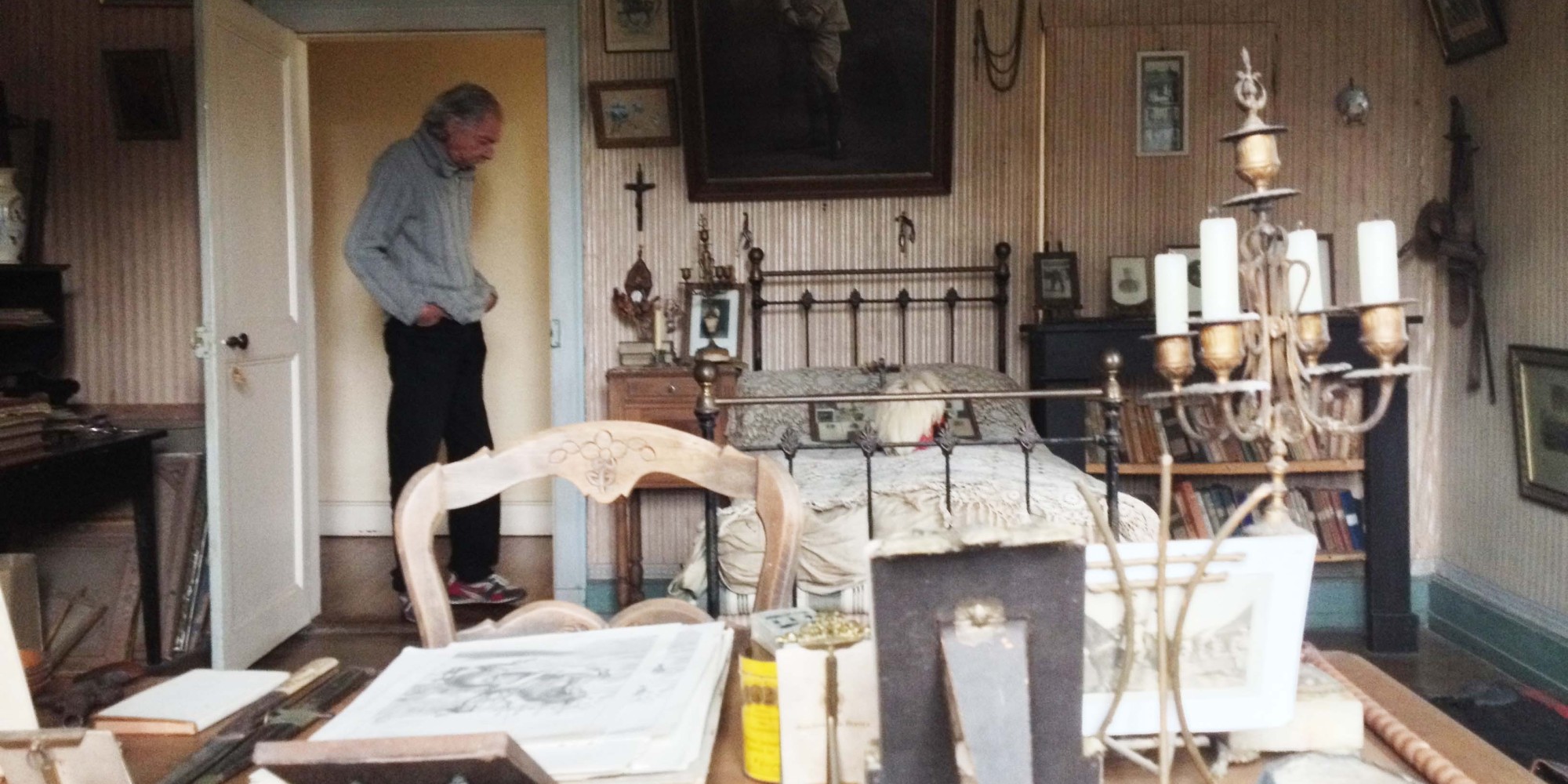
Hubert Rochereau’s room in a house in Bélâbre, France. Images Source: Bruno Mascle/Photoshot Images via the Guardian.

The Guardian recently reported on a time capsule which preserves a French soldier's room exactly as he left it before he left for the front during the First World War. It haunts the viewer and brings back to life a European domestic world that would be forever transformed by the war. The family stipulated that the room should not be changed for 500 years:
The name of dragoons officer Hubert Rochereau is commemorated on a war memorial in Bélâbre, his native village in central France, along with those of other young men who lost their lives in the first world war.

But Rochereau also has a much more poignant and exceptional memorial: his room in a large family house in the village has been preserved with his belongings for almost 100 years since his death in Belgium.

A lace bedspread is still on the bed, adorned with photographs and Rochereau’s feathered helmet. His moth-eaten military jacket hangs limply on a hanger. His chair, tucked under his desk, faces the window in the room where he was born on 10 October 1896.

He died in an English field ambulance on 26 April 1918, a day after being wounded during fighting for control of the village of Loker, in Belgium. The village was in allied hands for much of the war but changed hands several times between 25 and 30 April, and was finally recaptured by French forces four days after Rochereau’s death.

The parents of the young officer kept his room exactly as it was the day he left for the battlefront. When they decided to move in 1935, they stipulated in the sale that Rochereau’s room should not be changed for 500 years.

Image Source: HuffPo.


Photos from HuffPo include a photo portrait of the officer. Images Source: Matthieu Bock of Europe1 via HuffPo.

Image Source: news.com.au.

Image Source: tumblr. 

Image Source: tumblr. 

World War I, Day by Day


Monks watch the bombardment of Liège by a Zeppelin Airship. "Deutscher Luftflotten Verein" in the Battle of Liège (6 August 1914). Image Source: WWI Propaganda Cards.

To remember the centenary of the beginning of the First World War in 1914, the BBC has a general Website (here) and posted several podcast series (here; thanks to -C.). Among them, 1914: Day by Day (here) is narrated by historian Margaret MacMillan and gives a day-by-day account of the opening of the war in 1914, based on archival documents. By presenting this history in short recordings, one gains an understanding of how a great war could unfold on a daily basis and how contemporaries reacted. Imagine their shock and growing fear, their realization that this war was different from all the ones before it, when the Bank of England was forced to close on 31 July 1914, or when German Zeppelins bombed the Belgian city of Liège, the first air attack on a European city, on 6 August 1914.

Zeppelin attack on Liège 9 August 1914 (Albert Ebner Kunstanstalt München). Image Source: WWI Propaganda Cards.

The bombardment of Liège (Gustav Liersch Berlin Kr. 45 Art by: Hans Rud. Schulze). Image Source: WWI Propaganda Cards.