TIMES, TIME, AND HALF A TIME. A HISTORY OF THE NEW MILLENNIUM.

Comments on a cultural reality between past and future.

This blog describes Metatime in the Posthuman experience, drawn from Sir Isaac Newton's secret work on the future end of times, a tract in which he described Histories of Things to Come. His hidden papers on the occult were auctioned to two private buyers in 1936 at Sotheby's, but were not available for public research until the 1990s.


Showing posts with label Prehistory. Show all posts

Tuesday, May 20, 2025

Awaken the Amnesiacs 14: Songs from the Halls of Amenti


Today, I present the best conspiracy theory songs and music of red-pilled culture, which I have curated from Suno AI:

Conspiracy Theorists' Red-Pilled Mixed Tape

This blog has collected conspiracy theories as cultural artefacts from a critical period when social media exploded. With the aid of AI, netizens are paying homage to these ideas in a new genre of alienation and self-reflection. 

Many of these songs revolve around an underlying conviction that humanity suffers from a collective amnesia about our deep history. Is this a glitch in the Matrix? A moment of Jungian enantiodromia? The awakened masses intuit that we and our planet are part of a great story which we have forgotten. Can a historical date, say, 38 thousand years ago, really be projected onto these musings?

Every rabbit hole, every cover-up, every riddle in the dark, every exposé of aberrant corruption seems to lead back to this problem of species-wide amnesia. It doesn't matter whether we speak of the top of the pyramid or the core of the human heart. Somehow, the source of it all is a profound absence of memory. In place of memory, we get a degraded nightmare, as evident in reports from the Diddy trial (see Rotten Mango's coverage here and Tisa Tells' coverage here). 

Prior to that, perhaps the most recent major news item in this speculative space was the 15 March 2025 press release which asserted that a city has been located beneath the Khafre Pyramid on the Giza plateau:


SAR Scan of Khafre Pyramid Shows Huge Underground Structures by Greg Reese

One of the greatest mysteries just got bigger

Read on Substack


You can see more from Jonathan Evatt: 'What's Really Happening Beneath the Giza Plateau?'

This talk echoes long-standing occult whispers of Thoth's so-called Halls of Amenti, a hidden city beneath the Egyptian pyramids. Or was it another dimension or realm? This is a place where the concealed history of humankind, immortality, cloning, "secrets of the stars, the blueprints of the universe" are inscribed, it is said, in marble walls and pillars. That story criss-crosses with rumours of Plato and Atlantis, aliens and the New Age; check out more here, here, here and here. You can watch many videos relating to Manly P. Hall's lectures and writings on Thoth / Hermes here.

The March 15 fringe academic findings are comparatively sober. They maintain that there are columns beneath the pyramid which stretch down two kilometres:

"Corrado Malanga, from the University of Pisa, and Filippo Biondi, involved in radar and remote sensing research with the University of Strathclyde, published peer-reviewed research in 2022 via MDPI, entitled, 'Synthetic Aperture Radar Doppler Tomography Reveals Details of Undiscovered High-Resolution Internal Structure of the Great Pyramid of Giza.'

Their research was conducted using SAR data, Synthetic Aperture Radar, along with proprietary software, developed by ... Biondi, that transforms the radar signals into phononic information which allows for the detection of millimetric vibrations. This cutting-edge technology is capable of revealing underground structures invisible to traditional methods, and revealed internal structures never seen before."
More:

  • Schumacher, T., Pugacheva, P., Allam, H. et al. "Confirmation of the ScanPyramids North Face Corridor in the Great Pyramid of Giza using multi-modal image fusion from three non-destructive testing techniques." Sci Rep 15, 9275 (2025). https://doi.org/10.1038/s41598-025-91115-8 (18 March 2025)
  • Trevor Grassi, Facebook (20 March 2025): THE KHAFRE PROJECT ... is REAL! [Updated post as of March 27] HERE IS THE THE CONFERENCE, with English subtitles. You don't have to believe me; the team is speaking now... Initial hour long release: https://www.youtube.com/watch?v=xDpdJFlLpRE Here is the FULL CONFERENCE, with English subtitles - https://www.youtube.com/watch?v=bM8vzUUZdVM A friend,The team has also created an official facebook page with many new images: https://www.facebook.com/profile.php?id=61574443323296 Here is a short interview I have released with Jahannah James setting the matter straight: https://www.youtube.com/watch?v=kuyYGdfWw48 Here is another interview I gave with Mike Ricksecker: https://www.youtube.com/live/Gt7MeqFoJPA Here is my super deep dive with Jay Anderson: https://www.youtube.com/watch?v=nhT6Vd9vO3U&t=3336s Here the team's first English interview with Jay Anderson: https://www.youtube.com/watch?v=b513P5g7XmQ Here is their second English interview: https://www.youtube.com/watch?v=n9ISC9ji-WA And here is their third [English] interview with me ... : https://www.youtube.com/watch?v=OK3bjfxLM9s Original Post: For the record, if people are now looking to my feed here, for more information, yes; I was the source of this document and images. It is the project abstract, given to me by the Khafre Project Team; Corrado Malanga, Filippo Biondi, Armando Mei, and Nicole Ciccolo. (It is a separate document from their 2022 report on the Great Pyramid.) I've been helping them to help get their great discovery out to the world, and they gave me permission to release this. Their 2022 paper is peer reviewed, and they will release a written report on this one, but not until probably late June. It is in the works, I have confirmed. I have also released some major disclosures about the Giza Underworld, on my youtube channel, which are directly related to this new discovery and the Italian team. ... I am trying my hardest to get out a video to explain it all; how it was released, and why no one can find the source webpage. Those images were released by me, right here on this feed, on the day of the conference (15th). ... This discovery is REAL, and everything will be explained completely in time, rest assured! I feel completely honored to be the person who broke this story, and for the record, I had NO IDEA that was going to be the case ... . If you are interested in learning more about how this new innovation on traditional SAR scanning, which we are calling the 'Biondi Protocol', the ONLY source you should look to is Manu Seyfzadeh's fb page, where he has been explaining it in detail with many excellent posts. Manu was mentioned by name in the press conference, and he is now working to provide the [necessary] material to allow a secondary team to reproduce the results of the Khafre Project, for an unbiased confirmation of the method. See his profile here: https://www.facebook.com/profile.php?id=100016513153080. 
  • Related book, Under The Sphinx.

See all my posts in the series, Awaken the Amnesiacs.

Monday, October 8, 2018

Hallowe'en Countdown 2018: London's Dragons, Druids, and Pumping Stations


Image Source: Bob Speel.

The countdown this week is devoted to arcane secrets which lie in plain sight. We start in the streets of London, where for seven years, the brilliant and acerbic vlogger swilliamism (aka Samuel William) has explored the dark nooks and crannies of the UK's capital. During his lunch breaks from work, he peeks behind the white façades with his digital camera, and reveals unnerving little details.


Occult Symbols in London (23 April 2015). Video Source: Youtube.

The Symbolism Of The Dragon (20 May 2014). Video Source: Youtube.

Sam describes London's history with low key sarcasm. His videos have titles like: Where's Daddy's Pig?; Proud Taxpayer Day; Theft Appreciation Day; the eye-opening The Strange Mystical Horse and the companion video, The Strange Mystical Dead Horse; The Fresh Face of Fascism; Hello Data Subject; Very Nearly Grenfell; and A Day At The Arms Fair.

This vlogger's paranoia is not entirely joyless, like the time, inspired by fears of Santa Claus, he gave up Christmas to break his social conditioning. His main channel concentrates on the symbolism of London architecture, and he expresses his opinions more explicitly on his back-up channel.

Tuesday, October 10, 2017

Countdown to Hallowe'en 2017: The Famine of Memory


This is an early incarnation of the villain, Sauron, when he was known as Mairon. Image Source: The Land of Shadow.

One of the premises of Tolkien's Lord of the Rings is that the characters live in a perilous time when real history has been lost. Thus, mortal danger arises not from the arch-villain, exactly, but from the abandoned vigilance of memory.

A later incarnation of Sauron, when he was known as Annatar. Image Source © Angel Falto/Tolkien Gateway.

Another conception of Annatar, who deceived the elves in the Second Age. Image Source © Alaïs/deviantART/Tolkien Gateway.

Saturday, September 16, 2017

Last of Their Kinds: On and Off the Red List


Image Source: Sebastian Kennerknecht/PantheraCats/Twitter.

This year, the blog keeps returning to the Himalayas, and there must be something to that: see my earlier posts on the Himalayas here, here, and a 2015 post, here.

Today's post concerns the BBC report from 14 September 2017 that the snow leopard (Panthera uncia), the great cat of the Himalayas, has been removed from the endangered list, and is now classified as vulnerable. Scientists argue that the reclassification could place these cats at greater risk, but it is still good news that their population has improved.


As the snow leopard departs the endangered list, more than 150 species have been added to it. The ash trees of North America, a population of 9 billion trees, have been classified on the brink of extinction, due to an invasive Asian insect, the emerald ash borer (Agrilus planipennis). In the past few years, all the beautiful ash trees around my home in eastern Canada have died or started dying.

The Christmas Island pipistrelle bat was declared extinct this month. Image Source: Lindy Lumsden/Mongabay.

The Christmas Island Pipistrelle vesper bat of Australia (Pipistrellus murrayi) was declared extinct in September 2017. I have previously written on extinctions as less-recognized moments in history and as turning points in time. I have also discussed efforts to use genetic manipulation and cloning to bring back extinct species, as scientists work against the course of time and evolution; this is most noticeable when they plan to revive prehistoric species.


Image Source: BBC.


Image Source: BBC.

Image Source: Scott Olson/Getty Images/NPR.

Snow Leopard: First Intimate Images In The Wild - Planet Earth - BBC Earth (12 March 2017). Video Source: Youtube.


See all my posts on Extinction.

Thursday, August 25, 2016

Times Outside History 11: Neanderthal Cave Rings


Images Source: Etienne Fabre/SSAC via Guardian.

On 25 May 2016, The Guardian reported that archaeologists have redated structures in the Bruniquel cave, near the Pyrénées mountains, in the Tarn-et-Garonne region of southwest France. They claim stalagmite circles in the cave were built 176,500 years ago, rather than 47,600 years ago; the original estimate was based on carbon-dating findings elsewhere in the cave. The revision means that only Neanderthals could have created these mysterious installations:
"Mysterious structures found deep inside a French cave are the work of Neanderthal builders who lived in the region more than 100,000 years before modern humans set foot in Europe.

The extraordinary constructions are made from nearly 400 stalagmites that have been yanked from the ground and stacked on top of one another to produce rudimentary walls on the damp cave floor.

The most prominent formations are two ringed walls, built four layers deep in places, which appear to have been propped up with stalagmites wedged in place as vertical stays. The largest of the walls is nearly seven metres across and, where intact, stands up to 40 cm high.

'This is completely different to anything we have seen before. I find it very mysterious,' said Marie Soressi, an archaeologist at Leiden University, who was not involved in the research. Unique in the history of Neanderthal achievements, the structures rank among the earliest human building projects ever discovered.

Parts of the walls show clear signs of fire damage, with the stalagmites blackened or reddened and fractured from the heat, leading researchers to suspect that the Neanderthals embedded fireplaces in the structures to illuminate the cave."
The structures lie some 1,100 feet from the cave entrance, in total darkness, which indicates purposeful intent to build structures far from natural light. The size of these installations reveals complex cooperation and social organization. There is no sign of ongoing domestic occupation in the cave, which may imply that these sites were used for ritualistic purposes. Along with fireplaces, archaeologists have found remains of animal bone torches. From France's National Center for Scientific Research (CNRS):
"Since no other stalagmite structure of this scale has yet been discovered, the team developed a new concept to designate these carefully arranged pieces of stalagmites: 'speleofacts.' An inventory of the cave's 400 speleofacts reveals a total of 112 meters of stalagmites broken into well-calibrated pieces, weighing an estimated 2.2 metric tons. The components of the structures are aligned, juxtaposed and superimposed (in two, three and even four layers), with props around the outside, apparently to hold them in place, and filler pieces. Marks left by the wrenching of stalagmites from the cave floor to make the structures have been identified nearby. "
According to Live Science, there are older constructed sites in the world:
"Evidence of a human-made structure exists in Olduvai Gorge in Tanzania, dated at over 1 million years old. But this has not been studied extensively, Jaubert said. He added there is similarly little information about a Homo erectus campsite in Bilzingsleben, Germany (about 400,000 years old), early shelters in Terra Amata, France (about 400,000 years old), and the bone and stone materials found in France's Lazaret cave (around 170,000 years old). Researchers have credited Neanderthals with making a building out of mammoth bone in Ukraine. They believe this is about 40,000 years old."
See an article on this story from Nature here, and further reports here, here, here, here, here, here, and here. The original press release is here and related video is here.


"A 3D reconstruction of the structures in Bruniquel Cave. Rendering by Xavier Muth/GET IN SITU/ARCHÉOTRANSFERT/ARCHÉOVISION-SHS-3D; BASE PHOTOGRAPHIQUE PASCAL MORA."


See all my posts on Neanderthals.

Sunday, May 8, 2016

Pilgrim Timekeepers


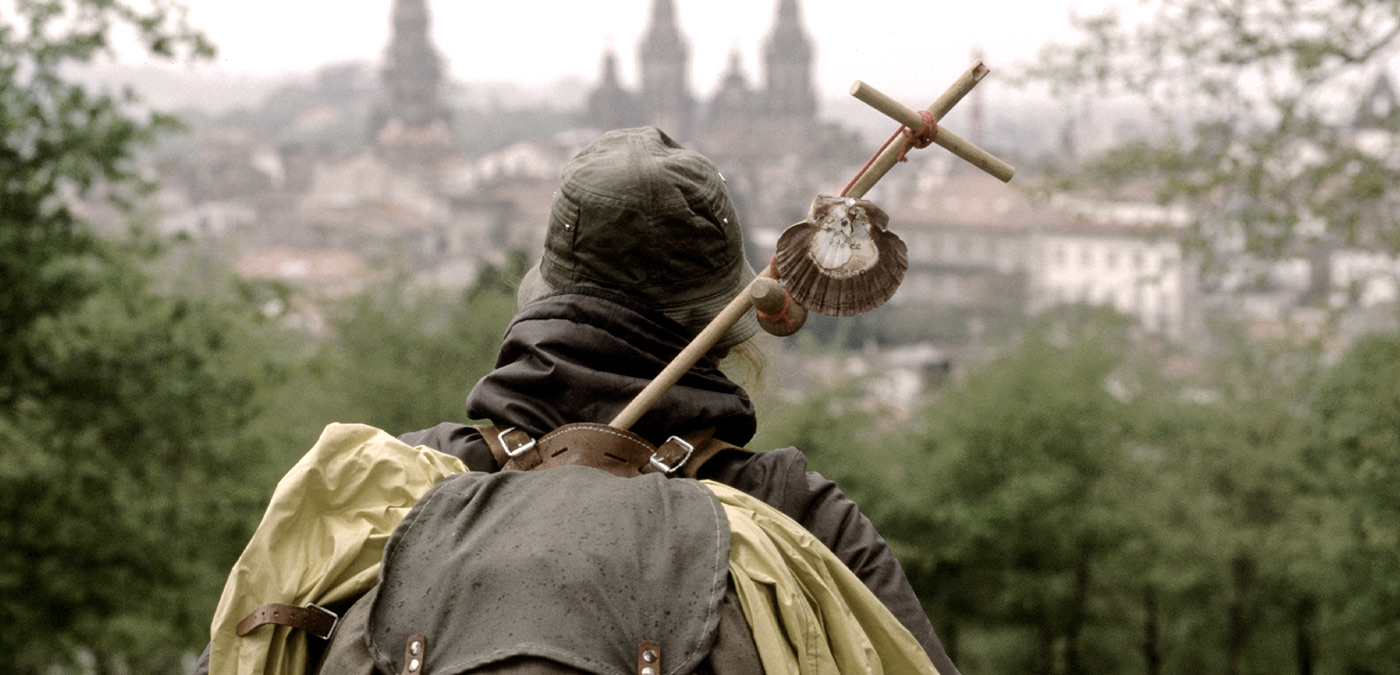
A pilgrim walking the Camino, or Way of St. James. Image Source: Tailored Spain.

If you want to know why tax season is in spring and its subsequent meaning for May, read on. As Catholic pilgrims prepare now for Pentecost on 15 May 2016, the blog returns to France's Chartres cathedral to note how places which attract pilgrims become centres of spirituality and memory. Pilgrimage routes have endured worldwide for thousands of years. One famous European route is the Spanish Camino de Santiago or the Way of St. James. In 2014, 200,000 people undertook that journey, and the road is on the UNESCO World Heritage List. 'Walking the Camino' is a huge event, even for atheists. For the faithful and secular alike, it is a modern walking holiday, attracting its share of business and crime.

In 2012, The Guardian asked why atheists participated in old Christian pilgrimages. Image Source: Guardian.

Monday, July 6, 2015

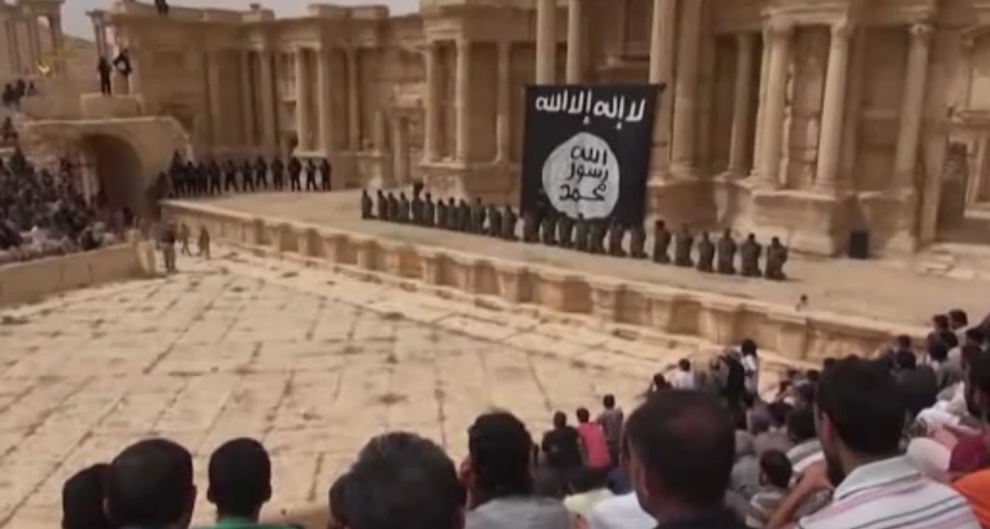
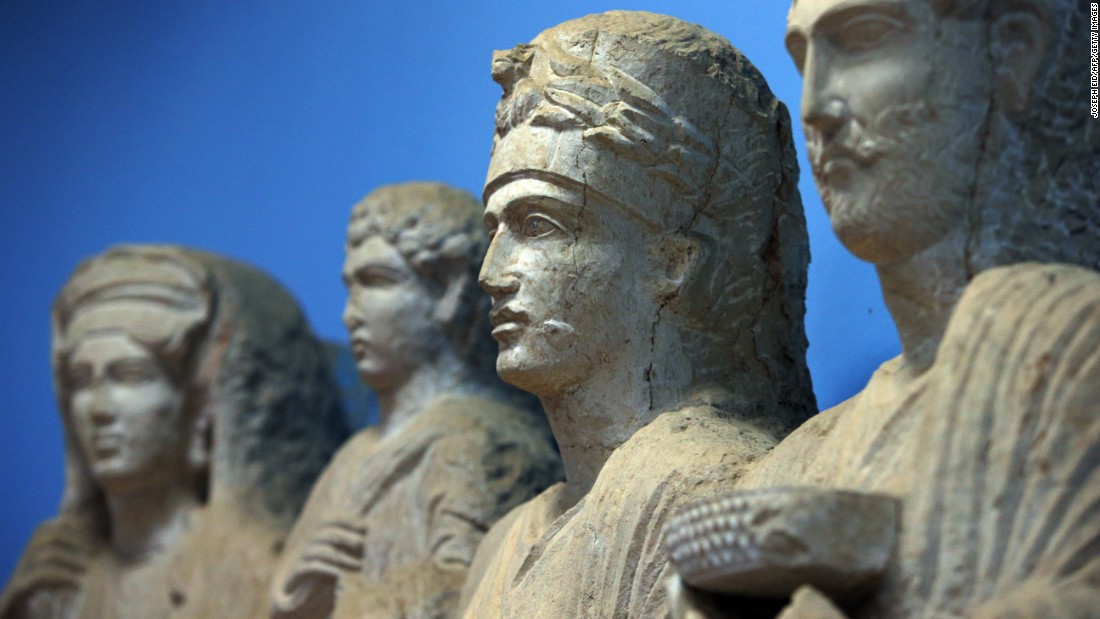
ISIS and Post-Diluvian Amnesia


A sphinx on the seafloor off the shores of Alexandria, Egypt. Image Source: All That is Interesting.

The Middle East is the source of all civilization on this planet. Any conflict there stirs the shared memory of all human beings. On 3 July 2015, days after ISIS or ISIL called for a jihad in the Balkans and declared caliphates in the Caucasus and Gaza, Breitbart reported that the radical Islamic movement has announced it will destroy the Egyptian sphinx and pyramids as a sacred duty:
ISIS “caliph” Abu Bakr al-Baghdadi told followers of his terror group that destroying Egypt’s national monuments, such as the pyramids and the sphinx, is a “religious duty” that must be carried out by those who worship Islam, as idolatry is strictly banned in the religion, according to reports. UK radical Islamist Anjem Choudary echoed Baghdadi’s sentiments, telling The Telegraph: “When Egypt comes under the auspices of the Khalifa [Caliphate], there will be no more pyramids, no more Sphinx, no more idolatry,” saying that the ancient statues’s destruction “will be just.” Another Islamist preacher, Ibrahim Al Kandari, agrees that the cultural monuments need to be destroyed to comply with the Shariah. “The fact that early Muslims who were among prophet Mohammed’s followers did not destroy the pharaohs’ monuments upon entering Egypt does not mean that we shouldn’t do it now,” he told Al-Watan.
ISIS has already made its name destroying the older ruins of ancient Mesopotamia. Why is ISIS so threatened by these ruins? As the video lecture below the jump makes clear, the 5,000-year-old Sumerian Epic of Gilgamesh is sexually intense, even by today's standards (read it here). Gilgamesh is also the foundation myth to end all foundation myths - it is the core story of our common civilization. It is the source material for our very understanding of organized social life. The opening lines to the 15,000 word work read:

"He who saw all, who was the foundation of the land,
"Who knew (everything), was wise in all matters.
"Gilgamesh, who saw all, who was the foundation of the land,
"Who knew (everything), was wise in all matters."

While there undoubtedly were many other epics sung in humanity's 100,000 to 50,000 years of prehistory, Gilgamesh is the earliest example we have. Its language marks the start of written history and that history begins with a cataclysm, a 'time before' and 'time after.' The story of all peoples is one of this terrible disaster, where great societies had arisen and then been destroyed by an archaic Flood. Most famous among these legendary antediluvian societies is Atlantis. J. R. R. Tolkien constructed part of his Middle Earth stories around an Atlantis idea, in which his hero, Aragorn, is descended from antediluvian superpeople. Gilgamesh describes that watershed, that moment at which people still remembered what was before, and what came after. It is likely that Gilgamesh's antediluvian and post-diluvian claim to primacy constitutes the indelible and eternal cultural threat which so unsettles the ISIS zealots.


It unsettles - but also inspires them! The Millennial mind fixates on the turn of ages, and no such time is more fundamental than the Flood, which was likely (if you believe quasi-historical theorists like Graham Hancock) an account of the ending of the Ice Age. If you wanted to understand ISIS's motives in a nutshell, look at their obsession with the Flood. They constantly borrow from the Flood myth, meaning that they intend to create a new watershed moment with a flood of blood to wash the world and erase its memory of what came before. They want to construct a new turning point and create a new reality. Directly below and after the jump, hear the opening of the Epic of Gilgamesh sung in its original language and hear it recited in English.

Peter Pringle performs. "By 2000 B.C., the language of Sumer had almost completely died out and was used only by scholars (like Latin is today). No one knows how it was pronounced because it has not been heard in 4000 years. What you hear in this video are a few of the opening lines of part of the epic poem, accompanied only by a long-neck, three-string, Sumerian lute known as a "gish-gu-di". The instrument is tuned to G - G - D, and although it is similar to other long neck lutes still in use today (the tar, the setar, the saz, etc.) the modern instruments are low tension and strung with fine steel wire. The ancient long neck lutes (such as the Egyptian "nefer") were strung with gut and behaved slightly differently. ... The location for this performance is the courtyard of Nebuchadnezzar's palace in Babylon. The piece is four minutes long and is intended only as a taste of what the music of ancient Sumer might have sounded like." Video Source: Youtube.

Monday, February 16, 2015

Modernity, Myth and the Scapegoat: Martin Heidegger, J. R. R. Tolkien and ISIL


Heidegger, at the centre of the photo, in the era of Nazi academia. Image Source: Le phiblogZophe.

Two paths diverged in the wood. I took the one less traveled by, and that has made all the difference. In 2014, the private notebooks of German philosopher Martin Heidegger (1889-1976) - muse of Jean-Paul Sartre, Jacques Derrida and Hannah Arendt - saw print. The publication of the so-called Black Notebooks confirmed that Heidegger's philosophy grew out of support for the Nazis and an essential anti-Semitism. Oceans of ink have been spilt over what Heidegger meant by Dasein, or Being-in-the-World (his union of subjective, objective and conscious perspectives with the world at large), but this elaborate existential debate completely misses the historical context which informed Heidegger's thought. Heidegger associated his cherished idea of Authentic Existence with the values of agrarian Europe. For the German philosopher, rootless Jews were part of a new, supranational world of corporate industry, banking and trade. Jewish precursors of globalization contributed to an inauthenticity of being, a life whereby everyday people, distanced from the soil, became phantom slaves in a technology-driven world that destroyed traditional culture.

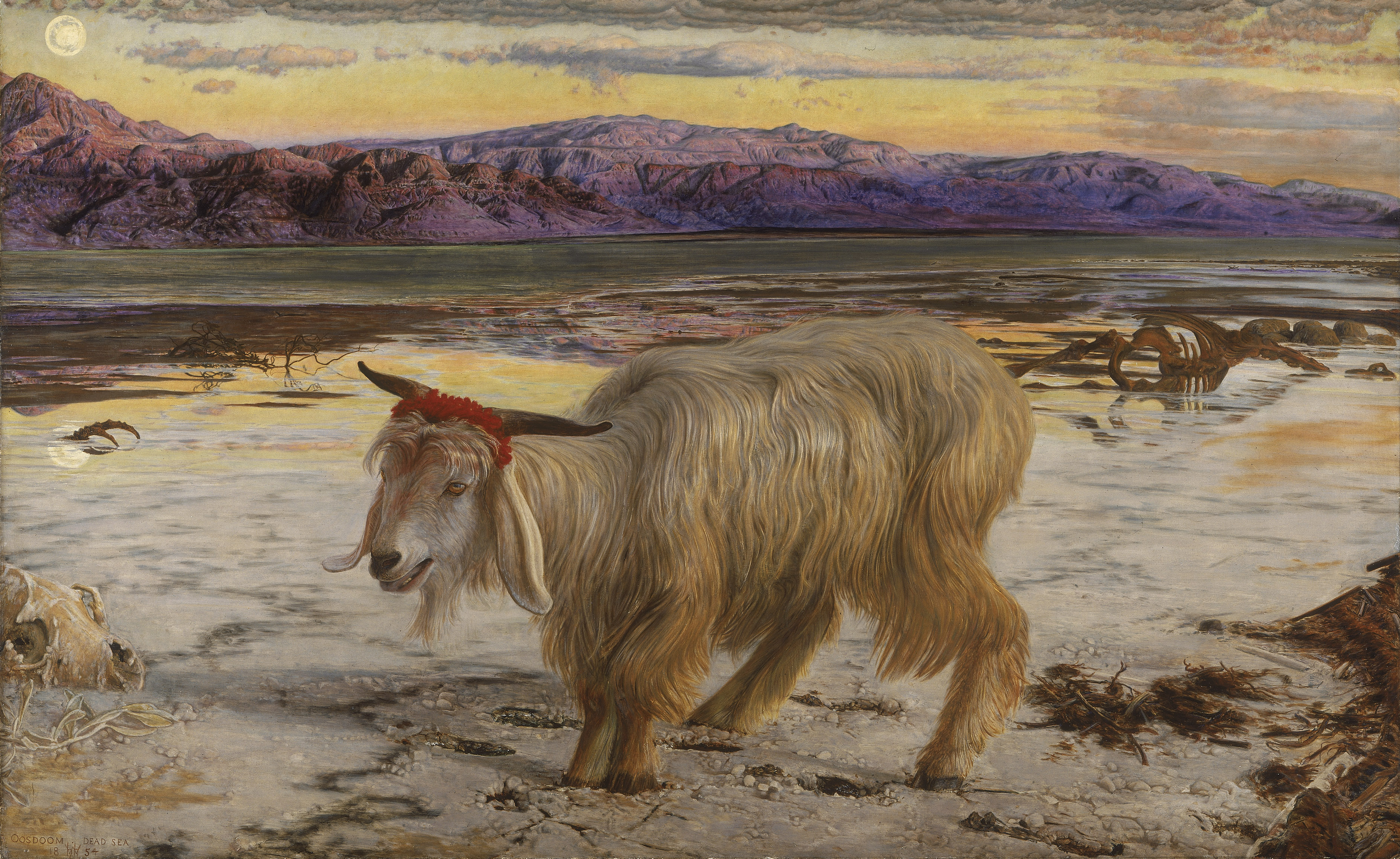
The Scapegoat by William Holman Hunt (1854-1856). Image Source: Wiki.

It is too simplistic to dismiss Heidegger's thoughts on being and time as aspects of the Nazi narrative. But it is also wrong to say that his ideas can be read separately from their Nazi context. Heidegger was in the same ballpark, and that demands a serious reappraisal of his ideas.

In building their Aryan mythology against the Jews, the Nazis ironically appropriated the Hebraic concept of scapegoating. The scapegoat was originally an early Archaic, pre-Classical improvement (dating from around the seventh century BCE) on the sacrificial rites of other ancient societies. Scapegoating, a mental gambit which is alive and well today, occurs when one projects one's sins onto a goat and sends it off into the desert to die; this leaves one free from blame and responsibility, and able to get on with life without feeling guilty for one's wrongdoings.

Monday, September 29, 2014

Counting Down to Hallowe'en: Tarot Cards and the Art of Divination


The High Priestess of the Tarot Illuminati deck (2013). Image Source: The Tarot Review.

Welcome to this year's Hallowe'en Countdown! Be sure to check other blogs participating in this October-long blogathon, here. This year, countdown posts will appear every Monday, Wednesday and Friday until the frightful holiday.

Today's post looks at how the tarot deck started with Renaissance social commentary and became a modern occult game which tells your future. During the Renaissance, tarot became less a card game about late medieval life and more a divinatory tool with alchemical symbols. Posing a question to cards is known as cartomancy, a partly rational, partly irrational exploration of the subconscious in relation to objectively- and subjectively-experienced time:
The divinatory meanings of the cards commonly used today are derived mostly from cartomancer Jean-Baptiste Alliette ([1738-1791] also known as Etteilla) and Mlle Marie-Anne Adelaide Lenormand (1776-1843). The belief in the divinatory meaning of the cards is closely associated with a belief in their occult, divine, and mystical properties: a belief constructed in the 18th century by prominent Protestant clerics and freemasons.
With this merger of social, historic and mystical ideas, tarot card games became associated with how an individual life can mesh with the world's larger destiny.

An example of how pre-Masonic alchemical knowledge from the Renaissance was embedded in the earliest tarot decks; this moment of illumination on the left is from the Rosary of the Philosophers (1550), but actually derives from earlier sources and was reproduced in the Sola Busca tarot in 1491 (the Three of Wands, or Clubs, on the right). Image Source: Sola Busca Tarot 1998. 

Illuminatio: the alchemical winged sun (an Egyptian symbol, later represented as variants of the Christian cross, see below) from the Rosary of the Philosophers (1550). "Some of the woodcut images have precedents in earlier (15th century) German alchemical literature, especially in the Buch der heiligen Dreifaltigkeit ([The Book of the Holy Trinity] ca. 1410)." Image Source: Wiki.

"The winged sun is a symbol associated with divinity, royalty and power in the Ancient Near East." 'Winged Sun of Thebes' (from Egyptian Mythology and Egyptian Christianity by Samuel Sharpe, 1863). Image Source: Wiki.

Rosicrucian Christian play on the same symbol. Image Source: pinterest.

Comments on the 1912 Cagliostro deck reveal the nuances between famous tarot decks and their different origins and influences: "The deck is based upon the works of Papus (Gérard Anaclet-Vincent Encausse) who was a proponent of the works of Lévi. Qabalistic attributions are also based on Lévi, and the majors are numbered in the continental style. The keywords follow Etteilla. So how to read it? Like a[n occult] Wirth deck." This is the Hermit trump card, one of the major arcana, from the Cagliostro deck. Notice how the wicked are defeated when knowledge is inverted. Image Source: pinterest.

As far as we know, playing cards were likely invented in China in the 9th century; but they are not artifacts which would long survive and probably have an earlier history. Playing cards arrived in Europe, probably from India, in the 14th century. For cards from other regions of the world, such as Indian ganjifa cards, go here, here and here.

When it comes to tarot decks, you can look at the classics or neo-classics: there is the oldest known surviving whole deck, the alchemical Renaissance Sola Busca (circa 1491); reprinted by Wolfgang Mayer in an impressive limited edition in 1998); the Visconti-Sforza (15th century); the Scapini (15th century); the Minchiate (16th century - a larger deck which includes slightly different trumps, the signs of the zodiac, the four elements and four virtues); the Marseilles (16th century); the occult Etteilla (1791); the Classic (1835); the Soprafino (1835); the Rider-Waite (1910); the Cagliostro (1912); the Knapp (1929); the Thoth (1943); or the faux-antique Deck of the Bastard (2013), which reproduces many elements from earlier versions in a deck amateurs can actually use. Or you can look at the latest decks, which I do below the jump.

Friday, March 14, 2014

Visit the Primordial Earth


Yahoo News reports on a collection of photographs from November 2012 from a volcanic field in Russia:
Tolbachik: hell valley on earth: Take a look at these stunning photos of an active volcanic complex called Tolbachik. The complex, located on the Kamchatka Peninsula in far eastern Russia, is one of many volcanoes in the area. Looking at these breathtaking images, it's easy to imagine dragons, demons and rivers of hell. Tolbachik is calm right now. A year ago, however, lava fountains and rivers decorated the landscape after the eruption began with the opening of two Tolbachik fissures. In the midst of this activity, photographers Luda and Andrey (lusika33) took a trip down to see that stunning hell valley on earth.
It is easy to see why this primordial scenery acts like a window on geologic time and appeals to Ur-memory, folkloric sensibilities and mythical imagination. See more below the jump, and compare to a Space.com video of a monster X4.9 class solar flare released 24 February 2014. These are grim reminders of something fundamentally alien in raw nature. All photos © lusika33. 

"The volcanic complex of Tolbachik is clearly visible from the village of Kozirevsk on the Kamchatka Peninsula in far eastern Russia."

Wednesday, January 29, 2014

Clay Tablet News Flash


Image Source: British Museum via news.com.au.

At the British Museum, Irving Finkel, the museum's assistant keeper of the Middle East, has deciphered a 4,000 year old clay tablet, on display as of 24 January 2014, which refers to ancient flood preparations. The tablet came to Britain via an RAF airman's Second World War service in the Middle East. The tablet predates Biblical sources by several centuries:
The tablet gives a version of the ark story far older than the biblical accounts, and Finkel believes the explanation of how "holy writ appears on this piece of Weetabix", is that the writers of the Bible drew on ancient accounts encountered by Hebrew scholars during the Babylonian exile [in the 7th-6th centuries BCE].
The tablet originated in Mesopotamia; its 60 lines of text are written in cuneiform:
The text describes god speaking to Atram-Hasis, a Sumerian king who is the Noah figure in earlier versions of the ark story.
He says: 'Wall, wall! Reed wall, reed wall! Atram-Hasis, pay heed to my advice, that you may live forever! Destroy your house, build a boat; despise possessions And save life! Draw out the boat that you will built with a circular design; Let its length and breadth be the same.'

The ancient Babylonian text describes the ark as a round 220-ft diameter coracle with walls 20-ft high.

According to the tablet, the ark had two levels and a roof on the top.

The craft was divided into sections to divide the various animals into their own sections.

The 60 lines of text, which Dr Finkel describes as a 'detailed construction manual for building an ark', claims the craft was built using ropes and reeds before being smeared with bitumen to make it waterproof.
Because the tablet stipulates that this 'ark,' or 'coarcle' was round, a new unusual detail has been added to the family of flood myths.

Finkel has penned a book and is preparing a television show around his translation of the tablet and the folk memory it relates, The Ark Before Noah (brought to you by the same people who published Teach Yourself: Complete Babylonian). CNN:
The newly decoded cuneiform tells of a divinely sent flood and a sole survivor on an ark, who takes all the animals on board to preserve them. It even includes the famous phrase “two by two,” describing how the animals came onto the ark. ...

We have known for well over a century that there are flood stories from the ancient Near East that long predate the biblical account ... .

What’s really intriguing scholars is the description of the ark itself. The Bible presents a standard boat shape – long and narrow. The length being six times the measure of the width, with three decks and an entrance on the side. The newly discovered Mesopotamian text describes a large round vessel, made of woven rope, and coated (like the biblical ark) in pitch to keep it waterproof.

Archaeologists are planning to design a prototype of the ark, built to the specifications of this text, to see if it would actually float. Good luck to them in trying to estimate the weight of its cargo. So, why does this new discovery matter? It matters because it serves as a reminder that the story of the Flood wasn’t set in stone from its earliest version all the way through to its latest incarnation.

The people who wrote down the Flood narrative, in any of its manifestations, weren’t reporting on a historical event for which they had to get their facts straight (like what shape the ark was). Everyone reshapes the Flood story, and the ark itself, according to the norms of their own time and place.
Coincidentally, the British Museum translation, book, and Channel Four TV show are being released just before the CGI-300-style, ancient-prepper film, Noah, starring Russell Crowe. The film will premiere on 28 March 2014. See the trailer below the jump. In the same vein, the sequel to 300, which deals with ancient Babylonia in the 5th century BCE, will be released earlier in March.

"Irving Finkel poses with the 4000-year-old clay tablet containing the story of the Ark at the British Museum in London on Friday." Image Source: The Hindu.

Friday, January 24, 2014

Evolutionary Babylon


"A rainbow-colored beast from the margins of a fifteenth-century text." Image Source: Public Domain Review via Paris Review.

The Justin Bieber mugshot is already an Internet meme (do not click here or here and don't don't don't click here (told you not to)). Fortunately, there are other things to think about, like the origins of life. Jeremy England, a 31-year-old physicist at MIT, thinks that he has identified the physics that underlies the difference between inanimate and animate matter. The thermodynamic theory, which complements Darwin's theory of evolution, is outlined in Quanta Magazine, and summarized below the jump.

The Hanging Gardens of Babylon, with the Tower of Babel in the background ("probably 19th century after the first excavations in the Assyrian capitals"). Image Source: Wiki.

Already, critics are queueing to attack England's ideas. But is this simply because his concept has appeared in many guises, to researchers working in various fields, each of which has a field-specific language and set of research precedents? Is the theory of the origin of life a modern Tower of Babel?

Sunday, January 12, 2014

Millennial Extremes 12: Listening at the World's Deepest Hole


Drill tower of the main borehole at Bortum-Erbendorf, Germany. Image Source: W.J.Pilsak/wikimedia commons via Discover.

Since the 1980s, crews have drilled near Windischeschenbach in northern Bavaria in Germany; they made an exploratory hole almost six miles deep (29,859 feet). They chose a spot which once lay on the fault line of an ancient continent. From Discover Magazine blog:
Drilling of the KTB borehole began in the late 1980s in a region of southern Germany called the Zone von Erbendorf-Vohenstrauß—the line where two ancient landmasses once merged to become the supercontinent Pangaea. The geology was bound to be interesting here, but even geologists were surprised by what they saw ... shifting seismic plates, boiling hydrogen, and temperatures reaching 600 degrees Fahrenheit … . The deep-drilling experiment yielded huge surprises about the structure of the earth, including maps of rock temperature, new information about seismic pressure, and beautiful models that show layers of rock wrapped around each other like ribbons.
The Russians drilled even deeper at the Kola Superdeep Borehole from 1970 to 1989; they eventually reached a depth of 40,230 feet, but then their funding ran out. This record-breaking borehole is no longer accessible.

The Russians' Kola Superdeep Borehole cap, welded shut, August 2012. Image Source: Wiki.

The German KTB borehole is the deepest artificial accessible point in the world. There are deeper, inaccessible oil wells. The natural Mariana Trench is slightly deeper than the German borehole. The Trench was explored by Canadian film director James Cameron in an exploratory vessel, Deepsea Challenger, in 2012. Incidentally, when Cameron reached the bottom of the ocean in this dangerous and daring exercise, his phone rang. His wife called to check up on him. He later joked that once a man gets married, he might think he's free when he goes off to explore the limits of the world, but he can never escape his wife. L3 provided the communication system for this extraordinary phone call.

In the case of the German borehole, we have a different audio sample. Drilling at the German KTB borehole stopped because, as in the Russian case, the funding ran out. Before the project ended, Dutch Gen Y artist Lotte Geeven recorded sounds at the base of the borehole, which you can hear below.

Audio Source: Lotte Geeven via Gizmodo via Discover Magazine.

You can see more about the story as it was originally reported at Gizmodo, which includes riveting seismic sound samples from earthquakes:
These moans aren't all that unique from the sounds beneath the boreholes, but they feel different to our human ears. Geoff Manaugh describes them as a "melancholic howl," while [sound artist Mark] Bain ... says they are "a bell-like alarm denoting histories in the making." Either way, we have our own ideas about what these cracks and grumbles articulate about the secret world below our feet.
See a report on the geological discoveries made in relation to this experiment, here. Deep drilling continues in the international project, the Integrated Ocean Drilling Program and its successor, the International Ocean Discovery Program.

See all my posts on Millennial Extremes.

Saturday, December 21, 2013

Welcome the Winter Solstice

Image Source:  Bentobjects via Dark Roasted Blend.

Today (17:11 UTC) marks the winter solstice, the shortest day and longest night, and the onset of winter in the Northern Hemisphere. You can see the gradual lengthening of days, second by second, here.  The winter solstice occurred this year in the Southern Hemisphere on June 21.

On this day, Stonehenge is a magnet for tourist groups, neo-pagans, Wiccans and neo-Druids. From Stonehenge Tours:
Stonehenge is carefully aligned on a sight-line that points to the winter solstice sunset (opposed to New Grange, which points to the winter solstice sunrise, and the Goseck circle, which is aligned to both the sunset and sunrise). It is thought that the Winter Solstice was actually more important to the people who constructed Stonehenge than the Summer Solstice. The Winter Solstice was a time when most cattle were slaughtered (so they would not have to be fed during the winter) and the majority of wine and beer was finally fermented.The exact time for the Winter Solstice is December 21st, 17.11pm (UK time).
See 2006 and 2009 videos of the great Neolithic and Bronze Age site below the jump. The earliest possible date for building at Stonehenge dates from around 3100 BCE. And to bring us back to the present, there's also a video for a 2008 Canadian winter tire ad.

Image Source: Mount Washington Observatory via Greetings May All Your Dreams Come True.

Image Source: Out of Ashes.

Lighthouse covered in ice in Cleveland, Ohio, on Lake Erie (16 December 2010). Image Source: National Geographic.

Image Source: Forum Garden. 
 
Snow in Athens (February 2008). Image Source: Kim Trathen / BBC.