TIMES, TIME, AND HALF A TIME. A HISTORY OF THE NEW MILLENNIUM.

Comments on a cultural reality between past and future.

This blog describes Metatime in the Posthuman experience, drawn from Sir Isaac Newton's secret work on the future end of times, a tract in which he described Histories of Things to Come. His hidden papers on the occult were auctioned to two private buyers in 1936 at Sotheby's, but were not available for public research until the 1990s.


Saturday, December 21, 2013

Welcome the Winter Solstice

Image Source:  Bentobjects via Dark Roasted Blend.

Today (17:11 UTC) marks the winter solstice, the shortest day and longest night, and the onset of winter in the Northern Hemisphere. You can see the gradual lengthening of days, second by second, here.  The winter solstice occurred this year in the Southern Hemisphere on June 21.

On this day, Stonehenge is a magnet for tourist groups, neo-pagans, Wiccans and neo-Druids. From Stonehenge Tours:
Stonehenge is carefully aligned on a sight-line that points to the winter solstice sunset (opposed to New Grange, which points to the winter solstice sunrise, and the Goseck circle, which is aligned to both the sunset and sunrise). It is thought that the Winter Solstice was actually more important to the people who constructed Stonehenge than the Summer Solstice. The Winter Solstice was a time when most cattle were slaughtered (so they would not have to be fed during the winter) and the majority of wine and beer was finally fermented.The exact time for the Winter Solstice is December 21st, 17.11pm (UK time).
See 2006 and 2009 videos of the great Neolithic and Bronze Age site below the jump. The earliest possible date for building at Stonehenge dates from around 3100 BCE. And to bring us back to the present, there's also a video for a 2008 Canadian winter tire ad.

Image Source: Mount Washington Observatory via Greetings May All Your Dreams Come True.

Image Source: Out of Ashes.

Lighthouse covered in ice in Cleveland, Ohio, on Lake Erie (16 December 2010). Image Source: National Geographic.

Image Source: Forum Garden. 
 
Snow in Athens (February 2008). Image Source: Kim Trathen / BBC.

Thursday, December 19, 2013

Cryptic Messages


Image Source: Live Science.

Live Science reports on a crypt which has been uncovered in the Sudan, in the old Christian Kingdom of Makuria, which reached its golden age from 750 to 1150 CE. The crypt is located in what was the capital city, Old Dongola, once an important centre in medieval Nubia (see a brief history of the region here). The Live Science report is based on a research publication from 2009. The archaeologists from the University of Warsaw who excavated the crypt and environs in 2009 have a Website here; you can see their 2012 excavation of the city's royal palace, here.

From the Kingdom of Aldoia, south of the Kingdom of Makuria, north of Khartoum: "Bishop Marianos (1005-1039) and Virgin with Child, after 1005 [CE]." Image Source: Early African Christianity.

Ruins of a Coptic Christian church in Old Dongola, Sudan. Image Source: SuperStock.

Tuesday, December 17, 2013

Photos of the Day: Microworlds


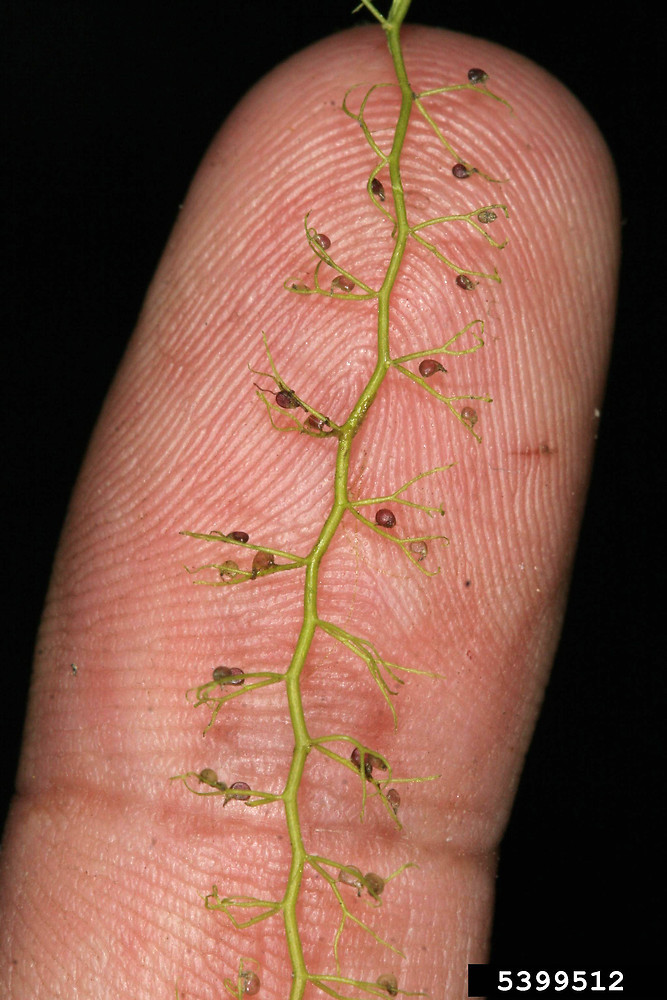
Humped, or Creeping, Bladderwort (Utricularia gibba) (click to enlarge), First Place in the Olympus BioScapes Imaging Competition (2013). Image Source: Igor Siwanowicz, HHMI Janelia Farm Research Campus, Ashburn, VA via NPR.

For today, a glimpse of tiny worlds! Above, see the fantastic First Prize winner of the Olympus BioScapes Imaging Competition. This is a digital microscopic photo, taken by Igor Siwanowicz, of the "[o]pen trap of aquatic carnivorous plant, humped bladderwort (Utricularia gibba). The floating plant digests microinvertebrates that are sucked into its trap a millisecond after they touch its trigger hairs." NPR explains how Siwanowicz took the picture:
Igor Siwanowicz, a neurobiologist at the Howard Hughes Medical Institute's Janelia Farm Research Campus ... magnified the plant 100 times using a laser scanning confocal microscope and used cellulose-binding fluorescent dye Calcofluor White to visualize the cell walls of the plant.
Siwanowicz's personal gallery of microscopic photos is here; the gallery has an e-card function, in case you need to scare (or delight) your friends over the holidays.

The Humped Bladderwort to the naked eye. Image Source:  Go Botany.

Directly below, see more microimages from Igor Siwanowicz.

Two male African mantis Pseudempusa pinnapavonis square off. Image Source: Igor Siwanowicz via HuffPo.

"A Giant Malaysian Shield Mantis cleans its tarsus (the last segment of an arthropodís leg) in Igor's home studio in Munich, Germany." Image Source: Igor Siwanowicz via HuffPo.

Desmids (a type of algae). Image Source: Igor Siwanowicz.

Cross section of a Juncus sp. leaf (a type of rush grass). Image Source: Igor Siwanowicz.

Below the jump, see more winners and honourable mentions from the Olympus BioScapes competition. The images are taken from the Olympus BioScapes 2013 Winners Gallery. All images here are copyrighted by the original photographers and are reproduced under Fair Use for non-commercial discussion and review only.

Photos of the Day: China's Moon Mission


Image Source: Xinhua/Wang Jianmin via Yahoo.

Caption for the above photo: "BEIJING, Dec. 14, 2013 (Xinhua/IANS) -- Photo taken on Dec. 14, 2013 shows a picture of the moon surface taken by the on-board camera of the lunar probe Chang'e-3 on the screen of the Beijing Aerospace Control Center in Beijing, capital of China. China's lunar probe Chang'e-3, with the country's first moon rover onboard, landed on the moon on Saturday night, marking the first time that China has sent a spacecraft to soft land on the surface of an extraterrestrial body."

Here are some photos from AP and Reuters via the Daily Mail and Yahoo of the Chinese lander, Chang'e, and its Jade Rabbit (Yutu) rover on the lunar landscape. The full moon in December, which occurs today, is called the Cold Moon or the Long Nights Moon; its names mark the run up to the solstice.


 The Yutu rover, photographed by the Chang'e lander.

The lander, as photographed on the lunar surface by the Yutu rover.


Saturday, December 14, 2013

Snow Blankets the Middle East


Snow at the Church of the Nativity in Bethlehem, Palestinian territories. Image Source: Bob May.

On 12-13 December 2013, Cairo saw its first snowfall in 112 years (hat tip: Quigley's Cabinet). The city of Safed, Israel saw almost 1 metre, or 1 yard, of snow fall, causing deaths and operational chaos. BBC has been reporting on the compounded misery of Syrian refugees. From the pictures of snowmen across the region, only children seemed overjoyed.

"Manger Square, with the Church of the Nativity in the background, in the West Bank town of Bethlehem." Image Source: MUSA AL-SHAER/AFP/Getty Images via Washington Post.

China's Dawn of Lunar Missions


Image Source: Peter Parks / AFP / Times Live.

The rover developed for China's Chang'e 3 (嫦娥三) lunar mission  is going to land tomorrow on the moon in a historic event. If the landing is successful, it will be the first spacecraft on the moon in four decades. The first launch under this programme, Chang'e 1, occurred in 2007. Beijing will follow tomorrow's landing with another lunar lander mission, Chang'e 4, in 2015. From The Planetary Society:
According to numerous Chinese news reports, Chang'e 3's landing on the Moon is now scheduled to begin at 21:40 Beijing time on December 14, which is 13:40 UT[, 8:40 Eastern] or 05:40 PT. That's about two hours earlier than previously stated. Once deceleration begins, the whole process will take about 750 seconds. Here is a Xinhua news site in English that may contain news updates about the landing. It is possible that this CCTV website will contain a news feed. Chinese television coverage will begin at 11:00 UT [or 6:00 a.m Eastern].
For China's English language Youtube channel, CCTV, go here. Their videos, tagged, 'Journey to the Moon' are here; the playlist will likely feature new videos tomorrow.

Friday, December 13, 2013

The Millennial Background Soundtrack


Intrusive, ultra-groomed media so dominate perception now that everyday life has a soundtrack. Whether it is a private iPod playlist, or the general racket of Web and TV news, marketing and incessant communications, there is a constant thrum of noise behind everything. In today's post, hear a few samples from composer Joshua Baker, who writes soundtracks for films, TV, the Web and video games. His work is disarming because it fades so perfectly into the meta-background.

Thursday, December 12, 2013

Virtual Fortunes, Supranational Futures


Image Source: Business Insider.

One globe, one currency? The Bitcoin - an online unit of exchange comprising a collection of numbers in a cyber-wallet - has exploded in value as speculators rush to buy the supranational virtual currency. They are buoyed by a widely-reported October 2013 investment success story and the simultaneous closure of the Bitcoin-loving online black market, The Silk Road. From The Guardian:
Kristoffer Koch invested 150 kroner ($26.60) in 5,000 bitcoins in 2009, after discovering them during the course of writing a thesis on encryption. He promptly forgot about them until widespread media coverage of the anonymous, decentralised, peer-to-peer digital currency in April 2013 jogged his memory.
Bitcoins are stored in encrypted wallets secured with a private key, something Koch had forgotten. After eventually working out what the password could be, Koch got a pleasant surprise: 
"It said I had 5,000 bitcoins in there. Measuring that in today's rates it's about NOK5m ($886,000)," Koch told NRK.

In April 2013, the value of bitcoin peaked at $266 before crashing to a low of $50 soon after. Since then, bitcoin has seen large fluctuations in its value, most recently following the seizure of online drugs marketplace Silk Road, plummeting before jumping $30 in one day to a high of $197 in October. ...

Typically bitcoins are bought using traditional currency from a bitcoin "exchanger", although due to strict anti-money laundering controls, the process can can be tricky. A user can then withdraw those bitcoins by sending them back to an exchanger like Mt Gox, the best known bitcoin exchange, in return for cash.
However, bitcoin is gaining more and more traction within the physical world too. It is now possible to actually spend bitcoins without exchanging them for traditional currency first in a few British pubs, including the Pembury Tavern in Hackney, London, for instance. On 29 October, the world's first bitcoin ATM also went online in Vancouver, Canada, which scans a user's palm before letting them buy or sell bitcoins for cash. ... In August, Germany recognised bitcoin as a "unit of account", allowing the country to tax users or creators of the digital currency.
Crucially, not all other countries and authorities have not followed Germany's lead. Warnings against Bitcoins come alongside reports of the currency's ever-growing practical circulation as people simply don't listen:
  • World's first Bitcoin ATM opens in Vancouver, CBC (29 October 2013)
  • Bitcoin entrepreneurs want to put virtual coins in your wallet, The Toronto Star (12 November 2013)
  • Bitcoin accepted as payment for $1 million Canadian home, IB Times (4 December 2013)
  • Greenspan says Bitcoin a bubble without intrinsic currency value, Bloomberg (4 December 2013)
  • Greenspan baffled over Bitcoin 'bubble': "To be worth something, it must be backed by something" Zero Hedge (4 December 2013) 
  • Bitcoin $10,000? Forbes (4 December 2013)
  • Bitcoins crash after China says they're not real currency, Softpedia (7 December 2013) 
  • Korea decides not to recognize Bitcoin as real currency, Korea Herald (10 December 2013)
  • Time to take the Bitcoin bubble seriously, FT (11 December 2013)
  • Bitcoin and intrinsic value: A layman's response to Alan Greenspan, CoinDesk (11 December 2013)
  • Are gold, art and Bitcoin worth your money in 2014? Forbes (11 December 2013)
  • Bitcoin should not be seen as a currency - Ernst and Young, Guardian (11 December 2013)

"Waves Coffee House is one of at least 20 businesses in Vancouver [Canada] that currently accept bitcoins." Image Source: CBC.

Despite the warnings, speculation has driven the price of 1 Bitcoin to a value of between USD $600 and USD $1,000. See CoinDesk's Bitcoin price index, here. But for speculators, the time to buy Bitcoins should have been between 2009 and 2012, when they were worth a few dollars.

Two cultural spheres are appearing around these financial activities: the first is the older financial world we know well, which is only partly virtual, but theoretically still grounded in reality; and the second is the Millennial, completely virtual world. Bitcoins diverge radically from the stable currencies associated with the nation-state establishment and the whole economic and governmental order built around that establishment. The new virtual currencies are completely surreal and chaotic, like a bad dream in a dystopian sci-fi novel. Welcome to what designers of the movie Aeon Flux called, the "burning garbage can vision of the future." Bitcoins are traded by iPhones in coffee shops and pubs, or in online chatrooms, rather than banks. The exchanges are vulnerable to hackers and theft. The currency also suffers from price fragmentation; that is, it varies in price on different online exchanges in the world. In this regard, Bitcoins differ from major national currencies; from CoinDesk:
The US dollar and other major national currencies effectively trade at the same price, regardless of whether they are exchanged in Tokyo, London, New York, or any other major foreign exchange market. ... The reason for the near-perfect price synchronization we see in major currencies like the US dollar relates to an economic concept known as the ‘law of one price’.

Put simply, this concept means that prices for fungible, freely-traded items like currency should be equal across all open markets.

If we were to observe any material, persistent price variation between US dollars exchanged in Tokyo versus those exchanged in London, then this would be due to the existence of some cost or barrier – like variations in transaction fees, the speed at which information can travel, transportation expenses, or restrictions to the flow of funds. However, we do not observe any such variance, due to the very low frictions across the major forex markets.

In contrast to the forex markets for major currencies like the US Dollar, at any given moment the bitcoin exchange rate can vary by tens or hundreds of dollars from one exchange to the next.
For example, approximately a week before bitcoin first crossed the $1,000 mark on Mt. Gox, the price of bitcoin had already reached the renminbi equivalent of $1,000 on China’s largest exchange, BTC China.

Following the recent announcement by Chinese authorities that banks would no longer be able to transact with bitcoin (which, in turn, triggered Baidu’s decision to suspend its acceptance of bitcoin), the price on 5th December as of 08:30 GMT had plummeted in China by a renminbi equivalent of approximately $177 more than prices on exchanges located outside of China ... .

Should the bitcoin market continue to grow in the months and years ahead, it would be reasonable to expect a decline in price fragmentation across the various exchanges as trading volume and liquidity increase.
For the time being, however, relatively illiquid markets alongside the barriers which have been erected around and between the various bitcoin exchanges will continue to drive price fragmentation.
Bloomberg posted reports this week on how to buy Bitcoins and commented on the virtual currency's shaky prices. See these videos - and an interview from the Guardian with one of Bitcoin's self-proclaimed developers - below the jump. Bitcoins will be supplied, this designer declares, until 2030, after which the supply will stop. But whether he actually was a Bitcoin developer or not is debatable. The original Bitcoin protocol was designed in 2008 by a person or group of people working under the pseudonym Satoshi Nakamoto.

Image Source: Guardian.