TIMES, TIME, AND HALF A TIME. A HISTORY OF THE NEW MILLENNIUM.

Comments on a cultural reality between past and future.

This blog describes Metatime in the Posthuman experience, drawn from Sir Isaac Newton's secret work on the future end of times, a tract in which he described Histories of Things to Come. His hidden papers on the occult were auctioned to two private buyers in 1936 at Sotheby's, but were not available for public research until the 1990s.


Monday, November 23, 2015

Awaken the Amnesiacs 1: The Gnostic-Hermetic Synthesis of 2015


Image Source: Spiritual Unite.

Western culture is undergoing a shift. New Age circles have been buzzing about it for the past few years, especially since the recession and 2012. Their chatter is now reaching a dull roar. For skeptics who want the TL;DR version, here is the

Executive Summary.
Several online movements are currently combining hermeticism and gnosticism to realign western values.

What this means.
Hermeticism combines monotheistic arcane traditions to inspire blind leaps in how we understand the world. Its early triad of alchemy, astrology and theurgy were termed as the 'three parts of the wisdom of the whole universe.' These translate in our terms into three aspects: first, science and rationalism of the mind; second, politics and emotions in the physical, the choices made to change the "life of matter and material existence"; and third, spirituality, our grasp of the relationship between the soul and what we define as divine. Sometimes associated with old Arab mysticism and the Kabbalah, sometimes with the occult, the Tarot and astrology, sometimes with Freemasonry, hermeticism is prevalent in popular culture today. This syncretic practice is being applied to gnostic philosophical unions of masculine and feminine principles to enable a shift in western perspectives. Much of this combination is due to the aftermath and reappraisal of 1960s' social revolutions, playing out during the Technological and Communications revolutions of the 2000s and 2010s. The philosophical synthesis also shows the next level of western engagement with virtual reality. Surging in the latter half of 2015, the trend may constitute a Fifth Great Awakening in America, but it is also evident in other western countries.

From September 2015. Image Source: Power of Consciousness.

Sunday, November 22, 2015

Lovecraft's Crusaders and Saracens


Austrian illustrator and fantasy cartographer Robert Altbauer circulated these cartoons of Lovecraftian monsters tangling with Crusaders and Saracens on 20 November 2015 at ArtStation:
This is a series of illustrations that imitates the style of old medieval paintings and adds a macabre flavour by incorporating some of H.P. Lovecraft's famous monsters. The text is mostly medieval Middle High German.
See more illustrations here (Thanks to -J.).


Tuesday, November 17, 2015

Look Skyward: The Leonids


Image Source: Gizmodo.

The Leonid meteor shower peaks tonight and falling stars from comet Tempel-Tuttle will still be visible for the next few days. From midnight to dawn, look between the Big Dipper and the constellation Leo, which is the radiant source of the shower, which will be visible in the eastern sky and overhead, in both hemispheres. For a global viewing guide, go here. Be sure to make a wish.

Image Source: Gizmodo.

A sample view of the Leonids' radiant, Ottawa, Canada, 2:13 a.m., 18 November 2015. Image Source: Stellarium.

Monday, November 16, 2015

Fountain of Youth 20: Alzheimer's Drug Reverses Ageing


Researchers Antonio Currais and David Schubert. Image Source: Salk Institute for Biological Studies.

Gizmag is reporting that a scientific journal article published on 12 November 2015 demonstrates that a new Alzheimer's drug reverses ageing. The authors of the article hypothesized that since Alzheimer's was caused by ageing symptoms, then reversing those symptoms would prevent or treat Alzheimer's. Gizmag:
The Salk research is looking to tackle the disease from a new angle. It expands upon a previous study conducted back in 2013, working with a potent memory-enhancing and neurotrophic drug called J147. Unlike most medicines designed to combat the disease, J147 was synthesized after looking at age-associated brain toxicities, and looks to tackle the major risk factor for the disease – old age itself.

The older research looked at the effect of J147 on mice with an inherited form of Alzheimer's, finding that it was able to prevent and even reverse memory loss in subjects. While that was promising, inherited Alzheimer's is far less common than cases of the disease triggered by old age.

The new study looked to discover whether the experimental drug is as effective at fighting Alzheimer's caused by old age, which is responsible for 99 percent of cases. Once the results were in, things were looking very positive, with the researchers surprised by how effective it had proved.

"We did not predict we'd see this sort of anti-aging effect," says lead author Antonio Currais. "But J147 made old mice look like they were young, based upon a number of physiological parameters."
Salk Institute for Biological Studies: Press Release, 12 November 2015.

Research report: "A comprehensive multiomics approach toward understanding the relationship between aging and dementia" in Aging, vol. 7/11 (November 2015), pp. 1-19.

Abstract: Because age is the greatest risk factor for sporadic Alzheimer’s disease (AD), phenotypic screens based upon old age‐associated brain toxicities were used to develop the potent neurotrophic drug J147. Since certain aspects of aging may be primary cause of AD, we hypothesized that J147 would be effective against AD‐associated pathology in rapidly aging SAMP8 mice and could be used to identify some of the molecular contributions of aging to AD. An inclusive and integrative multiomics approach was used to investigate protein and gene expression, metabolite levels, and cognition in old and young SAMP8 mice. J147 reduced cognitive deficits in old SAMP8 mice, while restoring multiple molecular markers associated with human AD, vascular pathology, impaired synaptic function, and inflammation to those approaching the young phenotype. The extensive assays used in this study identified a subset of molecular changes associated with aging that may be necessary for the development of AD.  

See all my posts on the Fountain of Youth.
See posts related to Alzheimer's, Memory and Anti-Ageing.


Tuesday, November 10, 2015

Photo of the Day: Technological Enslavement


Street photo taken by friend and reader, -C., in San Francisco, California, USA (October 2015).

- A note about the blog: as of today, lengthy posts are going up fortnightly, due to other work commitments.

This street poster promotes a book by Swiss writer James Heim. His site, VoluntaryEnslavement.com, warns that we are interacting with technology like drug addicts and enthralled cultists:
Our use of technology gives us a broad range of intriguing advantages, which in turn strengthen our belief in technology as a universal remedy. It seems increasingly self-evident, that we should focus ever more of our time, energy, and attention on technology’s efficiency and functionality to reach our goals and satisfy our needs.

Enjoying some ice-cream or a glass of beer or wine can great. Being agreeable has many advantages, as does exercising regularly. We know, however, that habitually enjoying too many sweets or too much alcohol, never being able to say “no,” and constantly overstraining one’s body are likely to have negative effects. These insights are common knowledge. We accentuate the important idea of balance through sayings such as “everything in moderation.”

Yet regarding technological development – the most crucial area of human endeavor in our times – there is an alarming absence of moderation. What are the consequences of this lack of restraint?

Aldous Huxley once remarked that “… in an age of advanced technology, inefficiency is the sin against the Holy Ghost.” Has our culture of technology become a religion? Are we – on a societal level – still able to question how quickly and thoroughly we are infusing technology into our human circumstances? Or has it become “sinful” to doubt our culture’s central paradigm, which simplistically equates technological development with being beneficial?

The book 'Voluntary Enslavement', by James Heim, fundamentally questions our technology culture. The questioning is rooted in the assumption that the variety of our human essence – for instance, that we are social and cultural beings – as well as human choice and freedom are valuable aspects of the human experience. It is explained why an uncritical submission to the inherent logic of technology's evolution inevitably dilutes human diversity and undermines choice and freedom. The book also examines the fueling of technological progression through the systematic over-empowerment of some of our primal motivations, such as curiosity. The basic pillars of an improved culture of technology (i.e., one that sustains a broad and free human experience) are discussed, as are the ways we can contribute to such a transition.

Changing our views on technology and our handling of technological development has become humanity’s biggest evolutionary challenge. Rising to the challenge would be humankind’s greatest accomplishment.
In 2010, I wrote that it would take time for anti-tech movements to get off the ground. When it comes to combating voluntary enslavement, the solution may be simpler than building a neo-Luddite counter-movement. Time recently reported that nanotechnology had lost its lustre; perhaps technological addiction will simply go out of fashion, like sun-tanning.

See other earlier posts on the Anti-Tech Backlash here, here, here, here, here and here.

Saturday, November 7, 2015

Making Memories


How our brains make memories. By tracking mRNA in brain cells, scientists captured the brain making memories. Hye Yoon Park, Ph.D. Source: Vine.

Tuesday, November 3, 2015

Crowdfund the Creative Life


Image Source: The Oatmeal (29 October 2015).

In 2014, Pierre-Michel Menger published a fantastic book, The Economics of Creativity: Art and Achievement under Uncertainty, which describes the strange social psychology that governs how we assign value to creative products. Artists and other creative thinkers have never been more desperately needed to understand the changes of the new Millennium; but they face industrialized work conditions, corporate business models, and commercialized distribution systems. Over-competition and over-supply create professional hierarchies in which obedience trumps innovation. Worst of all, creative disciplines - from the amateur arts to academia - depend on an idealized belief in genius achievement, which is supposed to ignore money to maintain purity of intention.

Menger argued that the problem of evaluating and supporting creativity should not be framed in terms of employment and work conditions. Rather, the focus should shift to understanding the nature of human invention and how to sustain it. We must rethink how creative people live and work and how they are compensated, because true creativity already depends on what Menger called "self-realization," a non-chaotic engagement with uncertainty. Move to the edges of any society, and you will find people analyzing and radically rethinking how our world works, and how we fit in the world. Thus, imaginative work is, by definition, not a fully programmable activity. It is unpredictable, both in terms of how long it takes and in terms of results. Yet that uncertainty must be managed, or creative people cannot survive, and their cutting-edge visions will be lost.

Sunday, November 1, 2015

Time and Politics 15: Educated Readers and Pimlico Flats


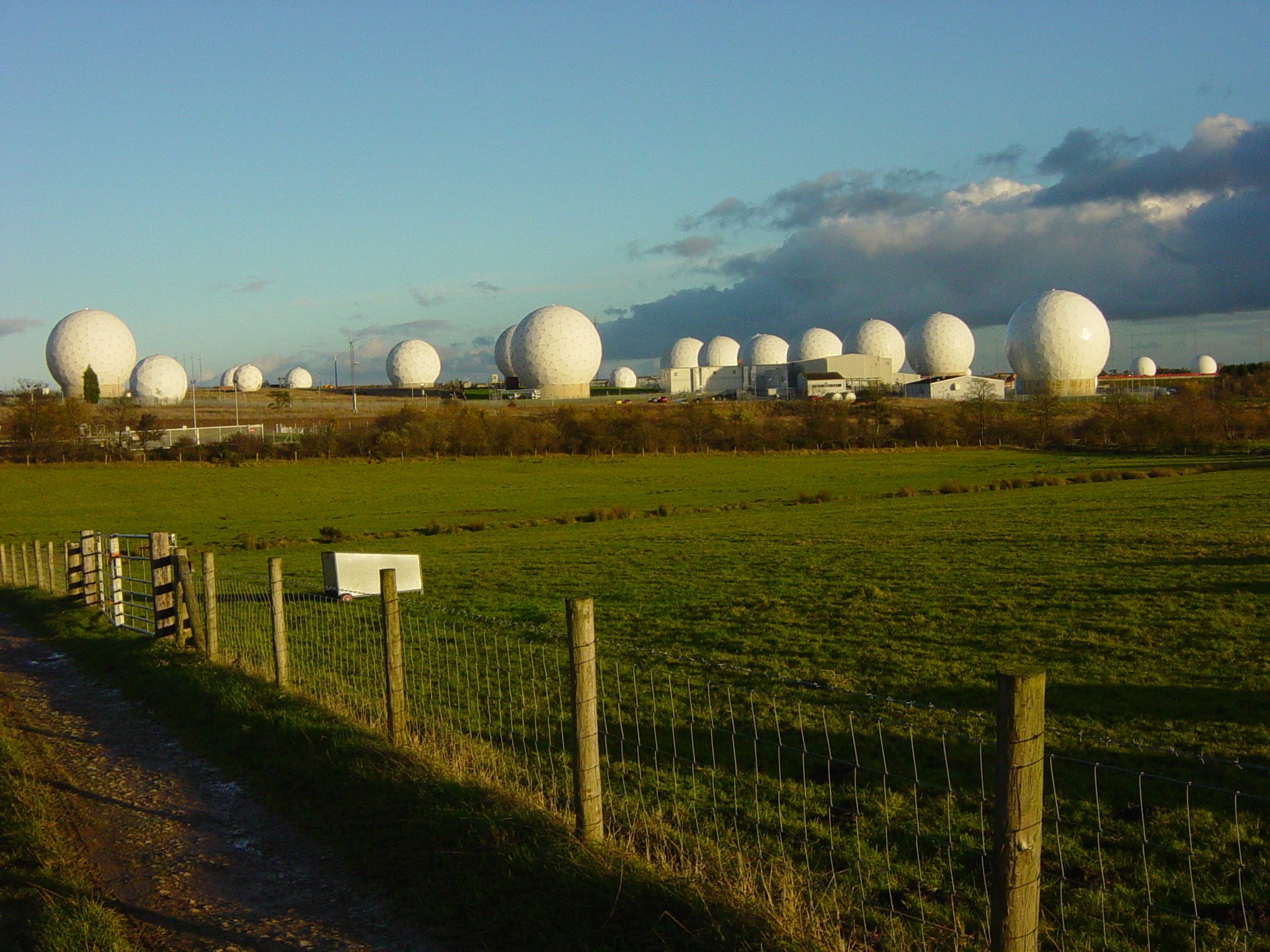
Williams worked for Echelon, or the Five Eyes, an intelligence accord between the UK, USA, Canada, Australia and New Zealand. The radomes in this photo at RAF Menwith Hill in North Yorkshire are alleged to be part of the ECHELON system. Image Source: Wiki.

Here is a follow-up to a previous post: there are hair-raising rumours online about the 2010 death of GCHQ computer expert and cryptographer Gareth Williams. In that earlier post, I quoted a passage from C. S. Lewis's That Hideous Strength, on how truth comes out in the tabloids:
"Why you fool, it's the educated reader who can be gulled. All our difficulty comes with the others. When did you meet a workman who believes the papers? He takes it for granted that they're all propaganda and skips the leading articles. He buys his paper for the football results and the little paragraphs about girls falling out of windows and corpses found in Mayfair flats. He is our problem. We have to recondition him. But the educated public, the people who read the highbrow weeklies, don't need reconditioning. They're all right already. They'll believe anything."
Williams's body was not discovered in Mayfair, but in a not-so-safe safe house in Pimlico, another district of the City of Westminster.

A supposed Met computer model reconstruction of the scene when Williams's body was found. Note how different this video-game-like scene is from the video of Williams's flat below the jump. Image Source: Breitbart.

Two rumours about Williams's death appeared in late summer 2015. In one story, he was named as the hacker in the Clinton diary hack. In another, a former Russian intelligence agent, now hiding in London (while chatting indiscreetly with the national press), claimed to have investigated the matter for personal reasons.