TIMES, TIME, AND HALF A TIME. A HISTORY OF THE NEW MILLENNIUM.

Comments on a cultural reality between past and future.

This blog describes Metatime in the Posthuman experience, drawn from Sir Isaac Newton's secret work on the future end of times, a tract in which he described Histories of Things to Come. His hidden papers on the occult were auctioned to two private buyers in 1936 at Sotheby's, but were not available for public research until the 1990s.


Thursday, November 20, 2014

Tomb of a Sleeping Queen?


Image Source: AP via National Geographic.

From Marie Antoinette, a modern Austrian princess, we go back through time to another queen, Olympias. We go back through Austria, or Österreich (the 'Eastern Reich,' the modern remnant of the Eastern Roman Empire), and before Rome, back to Greece. In Greece, archaeological circles are buzzing about a newly-discovered burial chamber from the time of Alexander the Great (Hat tip: Graham Hancock). It is 2,300 years old and is the largest ancient tomb in northern Greece.

The burial mound stands near ancient Amphipolis, 600 kilometers (370 miles) north of Athens. The tomb inside the mound is massive, marble-walled and ornately decorated, and must house the body of a royal personage, perhaps Alexander's mother or wife.

It is unlikely to be the tomb of the famous king himself, whose grave is lost somewhere in Egypt - another mystery waiting to be solved. The site is dated after his death, in the latter quarter of the 4th century BC, approximately between 325 and 300 BCE. Alexander died in 323 BCE. A member of the Argead dynasty ('from Argos'), Wiki describes him simply: "The most notable ancient Greek King and one of the most celebrated strategists and rulers of all time. Alexander at the top of his reign was simultaneously King of Macedonia, Pharaoh of Egypt, King of Persia and King of Asia." Because of his blinding legacy, still evident today, Alexander's impact arguably surpasses that of any other leader of the ancient world, including the Persian kings, the Egyptian pharaohs, and successive Roman emperors. Unsurprisingly, that interpretation is disputed by modern Iranian scholars. Legacies aside, the tomb dates from ancient Greece's highest moment of glory and power before the flowering of a multicultural Hellenistic imperial culture, which eventually led to the emergence of the Roman Empire after the Battle of Actium in 31 BCE.

Monday, November 17, 2014

Marie Antoinette's Millennial Rococo


Image Source © Cathy Fitzgerald via etsy.

The Internet has made history ahistorical, a treasure box for post-Postmodern plunder. Globalization allows designers to create a crazy quilt of anachronistic, cross-cultural references. Even as traditions are upended, they gain new life. For example, the world has never been more republican, but royal families survive as minor celebrities. There is also a subculture devoted to some royals who have achieved historical dead movie star status.

Image Source: etsy.

Popular history of these dead stars survives in role-playing clubs and historical reenactment communities, fueled by the Internet. The craft merchant site Etsy gives a snapshot of the cult around Marie Antoinette.

Even in her lifetime, she fell prey to a modern pattern of celebrity. She entered the French court as a teen-aged magnet of attention, and set the highest standard of beauty among her contemporaries. After giving birth in front of an audience of hundreds of courtiers she complained:
"I put on my rouge and wash my hands in front of the whole world!"
There are many cryptic and apocryphal quotations associated with her, including the falsely attributed, 'Let them eat cake,' to dismiss the starving people of Paris. This was actually a quote from Rousseau, published when Marie Antoinette was only nine years old and still living in Vienna.

Her mother, the great Austrian empress Maria Theresa, purportedly consulted a seer on whether her daughter would be happy in France; and the seer supposedly replied:
"There are crosses for all shoulders."
Finally, one of the most famous quotations associated with the ill-fated French queen is:
"I have seen all, I have heard all, I have forgotten all."
She still represents ornately-adorned beauty and lavish, glittering excess. She is also popular in Gothic circles as a morbid symbol of retribution for wastefulness and exploitation, a pale face of warning. This mixed message of wealth and justice, beauty and death rings true today, and so her popularity endures.

Addendum (23 October 2015): Tea at Trianon found an English transcript of Marie Antoinette's trial, here.

Image Source: etsy.

Tuesday, November 11, 2014

Remembrance Day Irreducible


Portsmouth Naval War Memorial, Hampshire, UK. Image Source: Commonwealth War Graves Commission.

A common inscription on 20th century war memorials is taken from Ecclesiasticus 44:7:
"All these were honoured in their generations, and were the glory of their times." 
The quotation, used in this context as opposed to its original biblical chapter, recalls that war is a bloody moment of transformation, which freezes in time because of the sacrifices of its participants. It suggests that war serves, in a terrible way, a social purpose which is poorly understood, and that social purpose, or change, comes at a cost. Rituals around Remembrance Day focus on values, veterans and memories. Behind that, there is the irreducible truth of episodic and savage convulsions in history, which force transformation.

Remembrance: First World War French Officer's Time Capsule


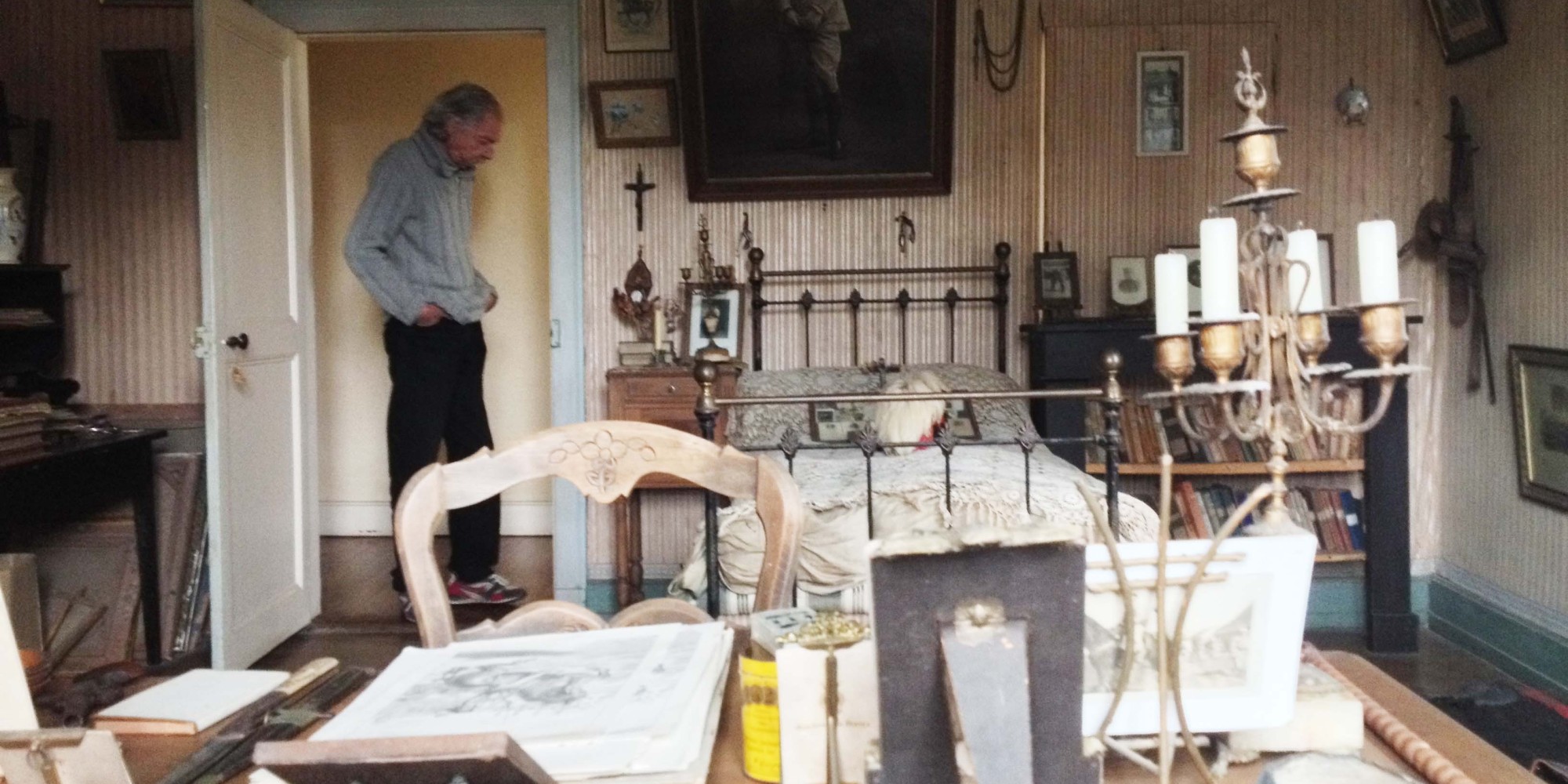
Hubert Rochereau’s room in a house in Bélâbre, France. Images Source: Bruno Mascle/Photoshot Images via the Guardian.

The Guardian recently reported on a time capsule which preserves a French soldier's room exactly as he left it before he left for the front during the First World War. It haunts the viewer and brings back to life a European domestic world that would be forever transformed by the war. The family stipulated that the room should not be changed for 500 years:
The name of dragoons officer Hubert Rochereau is commemorated on a war memorial in Bélâbre, his native village in central France, along with those of other young men who lost their lives in the first world war.

But Rochereau also has a much more poignant and exceptional memorial: his room in a large family house in the village has been preserved with his belongings for almost 100 years since his death in Belgium.

A lace bedspread is still on the bed, adorned with photographs and Rochereau’s feathered helmet. His moth-eaten military jacket hangs limply on a hanger. His chair, tucked under his desk, faces the window in the room where he was born on 10 October 1896.

He died in an English field ambulance on 26 April 1918, a day after being wounded during fighting for control of the village of Loker, in Belgium. The village was in allied hands for much of the war but changed hands several times between 25 and 30 April, and was finally recaptured by French forces four days after Rochereau’s death.

The parents of the young officer kept his room exactly as it was the day he left for the battlefront. When they decided to move in 1935, they stipulated in the sale that Rochereau’s room should not be changed for 500 years.

Image Source: HuffPo.


Photos from HuffPo include a photo portrait of the officer. Images Source: Matthieu Bock of Europe1 via HuffPo.

Image Source: news.com.au.

Image Source: tumblr. 

Image Source: tumblr. 

World War I, Day by Day


Monks watch the bombardment of Liège by a Zeppelin Airship. "Deutscher Luftflotten Verein" in the Battle of Liège (6 August 1914). Image Source: WWI Propaganda Cards.

To remember the centenary of the beginning of the First World War in 1914, the BBC has a general Website (here) and posted several podcast series (here; thanks to -C.). Among them, 1914: Day by Day (here) is narrated by historian Margaret MacMillan and gives a day-by-day account of the opening of the war in 1914, based on archival documents. By presenting this history in short recordings, one gains an understanding of how a great war could unfold on a daily basis and how contemporaries reacted. Imagine their shock and growing fear, their realization that this war was different from all the ones before it, when the Bank of England was forced to close on 31 July 1914, or when German Zeppelins bombed the Belgian city of Liège, the first air attack on a European city, on 6 August 1914.

Zeppelin attack on Liège 9 August 1914 (Albert Ebner Kunstanstalt München). Image Source: WWI Propaganda Cards.

The bombardment of Liège (Gustav Liersch Berlin Kr. 45 Art by: Hans Rud. Schulze). Image Source: WWI Propaganda Cards.

Wednesday, November 5, 2014

A Charm of Early Faith and Everlasting Life


Image Source: ReJesus.

Mysterious Universe reports on the discovery this September of a sacred charm, which demonstrates the earliest known use of magic in the Christian religion. (Hat tip: Graham Hancock). The spell is written in Greek on a 1,500 year old papyrus and dates between 574 CE and 660 CE. It was uncovered by researcher Roberta Mazza among other papyrii in the archives of the Library at the John Rylands Research Institute in Manchester, UK. Mazza assumed that folds in the papyrus indicate that the charm was likely worn inside a locket for protection. She remarked:
"The almost illegible text says that it was  released in the village of Tertembuthis (modern el-Ashmunein [in Egypt]) and is a receipt for the payment of grain tax which was certified by the tax collector from the village. Therefore we may reasonably guess that the person who re-used the back for writing the amulet was from that same village or the region nearby, although we cannot exclude other hypotheses. ... The amulet maker would have cut a piece of the receipt, written the charm on the other side and then he would have folded the papyrus to be kept in a locket or pendant. It is for this reason the tax receipt on the exterior was damaged and faded away."
Earliest known Christian magical spell refers to the bread at the Last Supper as manna from heaven. Image Source: Capital OTC.

The amulet links the Jewish Old Testament idea of manna, or food from heaven created at twilight on the sixth day of Creation, to the sacred bread eaten at the Last Supper, as described in the New Testament. This connection suggests that manna was the bread at the Last Supper, and it granted everlasting life to those who consumed it because it came from a celestial and sacred source. Manna is a curious symbol which bridges the physical and the metaphysical. As a charm, the papyrus embodies and coveys to its bearer some of that transitional power:
Whether or not it is overtly acknowledged as such, modern Christianity certainly maintains many of the primary components that could allow us to make such comparisons; namely that of prayer, and belief in its healing power as wrought by a merciful creator of all existence. And although it is aged by some 1500 years, the papyrus charm newly rediscovered at John Rylands Research Institute in the UK signifies the earliest known instance of such superstitions being observed in conjunction with a physical token of some kind.
The charm's text combines words from Psalm 78:23-24, Matthew 26:28-30 and other Biblical passages and reads:

“Fear you all who rule over the earth.
Know you nations and peoples that Christ is our God.
For he spoke and they came to being, he commanded and they were created; he put everything under our feet and delivered us from the wish of our enemies.
Our God prepared a sacred table in the desert for the people and gave manna of the new covenant to eat, the Lord’s immortal body and the blood of Christ poured for us in remission of sins.”


Monday, November 3, 2014

Small Worlds


Rotifer showing the mouth interior and heart shaped corona (40x) by Rogelio Moreno (2014). 1st Place.

Here are some of the winners from Nikon’s annual Small World microscope photography contest. (Hat tip and Images Source: Wired.)

Rhombohedral cleavage in calcite crystal (10x) by Alessandro Da Mommio (2014). 2nd Place.

Sunday, November 2, 2014

Feast of the Faithful Departed


Image Source: Salt and Light.

Today is All Souls' Day, when Catholics and other Christians celebrate the souls of the faithful departed. Salt and Life blog summarizes the meaning of this feast:
All Souls are our family and relatives, our neighbors and friends, our ancestors, that “cloud of witnesses” who accepted the godly realism of their lives, shared it with others already on earth, and continue to do so now before the throne of the Lamb in heaven. For this reason, they are truly blessed, and give us a reason to hope, to believe, to struggle and to live. The feast of All Souls and the month of November is a source of consolation for each of us.
All Souls follows the carnival of the dead in October, when unsettled and unforgiven spirits are freed to bewitch and unnerve, to drag away unsuspecting people and seduce them with the pleasures of the world and ensnare them in purgatorial diversions. What follows Hallowe'en's excesses is the celebration of All Saints on 1st November. And then on the 2nd of November, All Souls, a renewal of perspective, a pulling together, a recollection of what really matters.

The Christian feasts incorporated pre-Christian holidays, creating a yearly calendar that is a moral and psychological journey, bound up with the cycles of nature. Just as it is normal to go through periods of self-doubt, to lose one's way, it is natural, having found a new path, to experience a sense of renewed direction and purpose.

While this psychological journey is represented in other religions, the central challenge of the Christian tradition has always incorporated a tension between the individual and the collective. The historically Christian societies seek to resolve this central paradox: how can one battle to achieve the greater good in individualistic societies, which abhor an all-dominant collective? Which comes first: the individual or the community?

If Hallowe'en is a voyage into the excesses of the self, then All Souls is a reminder that there is a departed, silent collective, whose journey was somehow victorious. These souls still bear witness on the living. Even from a non-Christian or secular perspective, the symbolic message of such a journey is epic and compelling. Will the ghosts of 107 billion people bring counsel to those who are living stewards of reality?