TIMES, TIME, AND HALF A TIME. A HISTORY OF THE NEW MILLENNIUM.

Comments on a cultural reality between past and future.

This blog describes Metatime in the Posthuman experience, drawn from Sir Isaac Newton's secret work on the future end of times, a tract in which he described Histories of Things to Come. His hidden papers on the occult were auctioned to two private buyers in 1936 at Sotheby's, but were not available for public research until the 1990s.


Showing posts sorted by relevance for query "trust no one". Sort by date Show all posts

Thursday, February 17, 2011

A Matter of Trust

V for Vendetta imagery persists around WikiLeaks-related stories. Image Source: Ars Technica.

Back in 1990, Hal Hartley directed a great little film called Trust, starring the late lamented Adrienne Shelley and Martin Donovan.  This dark comedy hinged on a critical moment where the heroine informs the hero that love depends above all on trust.  It's a social value that is also at the root of doing business.  Within the bounds of a contract, we expect that we can trust our partners.  But now, trust is changing. 

In a recent Piers Morgan CNN interview, this was the main point put forth by Cameron and Tyler Winklevoss about their former partner Mark Zuckerberg regarding the disputed origins of Facebook.  They maintained that within the bounds of a business agreement, there is nothing irrational about trusting your partner, while Morgan argued that in high-stakes business, people get stabbed in the back all the time.  Morgan said: lack of trust is normal.  You should expect that.

Thursday, March 19, 2020

Coronavirus: The Garden of Earthly Delights


Image Source: 4chan.

This is a surreal moment, not a funny one. Plague humour takes on a Bosch-like quality. Bosch depicted sin as a catalyst for social breakdown in his Garden of Earthly Delights. His famous triptych symbolically portrayed a world letting go. That's the feeling now. Jokes get thrown in with intense news reports and crazy conspiracy theories. There is no clear narrative.

Paranoia and Priorities

Image Source: 4chan.


Crazy predictions, apparently from 2017 - or if you prefer - crazy disinfo. Click to enlarge. Image Source: 4chan.

The Internet Underground, as I have previously blogged, regards Aaron Swartz (1986-2013) as a Gen Y hero; rightly or not, they believe his death reflects deep corruption at MIT and Harvard. Image Source: 4chan.

As authorities respond to the spread of the coronavirus, public trust dissolves into paranoia. It is hard to trust officials when so many disturbing things were happening prior to this pandemic. Even with the best containment measures, governments and hospitals will not be able to contain the medical tsunami. Failures may be so catastrophic that they will look orchestrated or premeditated, even if they are not.

Combine that disaster with economic failure and restrictions on citizens' movements, communications, and activities, all on a stage set to sweep aside civil rights. An economic Gordian knot could be conveniently cut by means of the pandemic response. At the same time, the public will be immobilized and partly decimated. This is not a nice coincidence.

Even red-pilled and black-pilled anons are surprised. They nursed alienation from the 'normies,' whom they regard as wage slaves, for two decades. Anons' distrust of the establishment is so complete that they regard everything labeled 'good' as 'bad,' and vice versa. Yoichi Shimatsu's quotation above in relation to the late Aaron Swartz is emblematic of these priorities:
"Striking at the nerve center of the military-corporate-pharmaco-porno complex is an ethical duty not a crime, one of the few available means to defend constitutional law."
Anons cannot decide now whether soldiers are being shuttled around countrysides to help them in an eleventh-hour coup against Deep State actors - or if the military are ready to imprison dissenters in quarantine camps.


To some extent, this nervousness extends to the mainstream public, made worse by mixed messages from governments and media and the fact that this nCov crisis reminds everyone of 9/11. Compare a semi-official statement about tanks moving now into London, UK with a citizen's observation. Like 9/11, this pandemic will shape the global landscape for another twenty years. Like 9/11, the devastation will not just be measured in terms of loss of life. Unless there are serious, far-reaching changes to shift things away from the current technocratic drive to control the very thoughts inside our heads, this pandemic will be remembered in terms of a powerful loss of faith in existing politics and society. That trend will probably overturn most systems of authority today, whose leaders assume that they will consolidate power through this crisis, not be flushed away by it.


"Harness Biology as Technology"

The public have good reason to doubt the integrity of the global establishment. Things were hardly ideal before the pandemic began. Below is a screenshot of a 12 November 2015 report in Nature about bat virus research at University of North Carolina at Chapel Hill. It is one of the reasons anons - and the Chinese government - claim that the coronavirus had a (partially) American source. There are also reports about an explosion at a Russian biolab, known as VECTOR, from September 2019. There is a Harvard connection, and a Canadian connection, to this crisis.

Image Source: Nature via 4chan. Click to enlarge.

The main thing to take away from this speculation is that it is not all paranoia and disinformation. Gain-of-function research was certainly taking place in top level biolabs over the past few years. Chinese scientific publications from Wuhan were full of it. The money was there for it and the Chinese were not restraining their scientists with red tape or regulations. There was an ethical debate about reckless behaviour in this field within the scientific community.

This is before we get to highly questionable genetic experimentation with tools like CRISPR. And it is also before we get to strange innovations in quantum computing, artificial intelligence, biotech, and nanotech, all of which overlap in the worst ways with genetic experiments. It is easy to dismiss lunatic conspiracy theorists who have been rambling for years about vaccines, chemtrails, and retweeting Julian Assange's warnings against smart dust. But they have a point: DARPA has stated that its goal is to "harness biology as technology."

Public fear is justified, because the scientific and tech communities have not restrained themselves. They have not moved forward in careful ways. They have been held back only by the availability of funding and legal jurisdictions. No one appears to have lost sleep over whether certain experiments should even have been attempted. Lines are and were being crossed all over the place. Researchers have been arrogant and deceitful in their practices and this time, the Petri dish blew up in their faces.

At the same time, specialists in the arts and humanities have failed. They normally act as critics to indicate a larger moral context when science, technology and engineering get out of control. Gone are the greats like Jacob Bronowski, who could stand in a human ash pool at Auschwitz and state: "we have to cure ourselves of the itch for absolute knowledge and power." Bronowski warned repeatedly that knowledge must move forward with integrity, and that anyone who did not pair integrity with knowledge would lose the light of true understanding and any power and authority that might accompany that understanding. Only Bronowski could have pleaded for the integrity of science in terms of the Auguries of Innocence by William Blake:
"To see a World in a Grain of Sand
And a Heaven in a Wild Flower
Hold Infinity in the palm of your hand
And Eternity in an hour"
I discussed Bronowski's assessment of physics in the 20th century as an "immortal work" in my 8 April 2011 post, Worlds within Worlds.

The Jacob Bronowskis are gone. The most vocal practitioners in the arts and humanities have become compromised by politicized navel-gazing. Unlike researchers in the sciences, they barely get funded anyway. And when they do, it is for the worst reasons, to bolster Franken-science with Orwellian goodthink. I get the impression that the only permitted 'soft' fields around cutting edge 'hard' scientific research are espionage, finance, politics, and marketing. The classic commentator from the humanities, who once played a crucial role in scientifically- and technologically-advanced societies, has devolved into a controlled environmental activist pawn like Greta Thunberg. At least the pandemic has mercifully forced her off the world stage.

As an individual, I have tried on this blog to meet the moral obligation to society of a person based in the humanities and the arts, by holding up a philosophical mirror to the Millennial march progress. In the past two decades, there are a lot of bloggers and vloggers in the alt-media who have also done this, as well as some trolls and hacktivists.

In order to grasp the myriad of scientific and technological experiments, tests, trials and research groups which were underway at a single point in time, I selected one month as an example. In February 2016, I tried to track down as many science and tech reports as I could in the mainstream English-speaking press or in institutional press releases. I summarized my findings in one post: Science and Tech: Headlines and History in February 2016.

I barely scratched the surface of what was currently being pursued in labs and test facilities in the United States, let alone worldwide. The footage I remember above all was of a Cape Cod warehouse, in which DARPA was repeatedly flying small, very expensive quadcopter drones into cement walls. I had hoped to make this type of post a monthly digest, but there was simply too much information for me to catalogue. It was overwhelming. I reflected on this big picture in the post, The New Millennium's Gothic Moment.

Image Source: 2001: A Space Odyssey via 4chan.

Surreal Reality: The Garden of Earthly Delights

Notice that mainstream reporting on nCov and COVID29 consistently draws attention away from any moral failing on the part of the scientific community. Were researchers playing with fire in Promethean bioweapons projects? Rather than broach these concerns, the MSM fail in their duty, and paper over the cracks. They fixate on pandemic numbers and manage public behaviour. No one is allowed to get to the bottom of preexisting problems which may have lain at the root of what has occurred.

The only reason this comes as a surprise to the public is that we were not paying attention, and we trusted our governments and universities to monitor top level biolabs. That wasn't happening.

As a result of the lies and cover-ups, no one knows what is really going on. We can't get a real grip on this thing. No one is being held accountable. We could even be in the early stages of World War III, and be blind to it. A Canadian anon expressed the Underground's sentiment:
"we can only speculate as to whether coronavirus is a nothing burger or not. if you trust the media, or politicians, or the corrupted scientific establishment you are naive. but you cant totally discredit them either. we can just speculate and guess as to whats going on because everyone everywhere is a lying piece of shit.

should you be worried or not i dunno, flip a coin, 50/50

maybe this is the best possible response, maybe its the worst possible response. feel free to speculate but dont pretend like you know fuck all, you are just a dumb fucking peasant like everyone else and you dont have access to accurate information. who the fuck does?"
This uncertainty creates a surreal atmosphere. No one knows what exactly is happening in this pandemic, how it started, and where it is going. This has led to disillusionment about some leaders, and to jokes and criticism at their expense, which they may or may not deserve. More seriously, it has led to accusations between Chinese and US governments about the origins of the nCov virus.


An American veteran's response to Lijian Zhao on 4chan: "dude when I was in the army there wasnt even enough money to fart outside let alone poison a bunch of bats in wuhan." Where the uncertainty about reality goes, actual reality follows.

Image Source: 4chan.

Image Source: 4chan.


This prepper earned his beer. Image Source: 4chan.


See all my posts on Epidemics here and here.

Sunday, February 26, 2012

Time and Politics 6: Dr. AntiSec, Or How I Learned to Stop Worrying and Love the Internet

X-Files, Tagline from Season 1, Episode 24, "The Erlenmeyer Flask" (1994). Image Source: The X-Files Taglines.

The political and governmental capacity of the Internet is evolving so rapidly that it outpaces all the analysts currently acknowledged as experts in the fields of international relations, political economy and foreign policy.  Every world trade meeting, high end newspaper editorial, and talking head session coming out of the MSM outlets looks moribund and woefully out of touch. Acknowledged authorities on these matters go on about the gold bubble and the price of oil, unemployment and the Arab Spring. A China slowdown and tax policy. Nuclear Japan and nuclear Iran. Analyses are politically skewed, and the audience is expected to be passive.  Viewers and readers are meant to believe what they are politically inclined to be told, whether or not those politics still reflect reality. 

No one in the halls of power observes that the pitched (and remarkably boring) right-left battle between global elites simply does not address current conditions.  To start, take the growing gap between rich and poor, the growing sections of a crumbling, alienated middle class in developed countries, and the disenfranchised everywhere else. The broad consensus attained through prosperity (or its promise) has been pulverized. The old Roman trick of bread and circuses no longer keeps the mob pacified. The Internet itself became part of a series of marketed distractions, petty consumerist addictions, and cheap sham equalities.  A gadget in every hand. But after the recession hit, neither right nor left formulas could hasten recovery, and the popularity of hacktivism increased dramatically. The online distraction became an obsession, and then almost overnight, the foundation of a new world.

Image Source: Ars Technica.

Meanwhile, the factor that authorities and commentators should try to understand, Cyberpolitics, is acknowledged by pundits via a superficial acquaintance with Julian Assange's shenanigans; or it is skimmed over out of ignorance; or it is derisively poo-pooed as the preserve of basement-dwellers and politically naive computer freaks, whose facility with the mysteries of technology is at worst unnerving. Since the province of computer hacktivism is virtual, it is deemed far removed from the gritty, physical day-to-day modern governmental realities of political parties, fund-raising, friendly think tanks and partial NGOs, lobby groups, private interests, intelligence reports, and back room deals. Instead of looking at and encouraging the positive governmental potential of the Internet, Cyberpolitics has been treated negatively as a security issue.

Being a hacker target had, until recently, been deemed by firms simply to be a security problem for their in-house IT staff or for an out-of-house IT security contractor (that is, until the security contractors got hacked - it was embarrassing). In that climate, hackers become king.

One glance at Twitter's #antisec feed, and anyone schooled in the history of politics, and more importantly, the structure of government, would start to wonder whether movements on the Internet could become the Millennial power groups. Beyond their pet causes, hacktivists might reshape democracy and anti-democracy, as well as the very form of the state.

On the one hand, I see why someone would tweet: "The time to act is now. If youre waiting for November, then you still buy into the lies. There r no political parties."  It is not just disenchantment and a bad economy.  It is not just - as some critics have said - bad character of entitled youth. The Internet is changing the fabric of statehood itself.

On the other hand, the blind support hacktivists receive is troubling.  They adore Orwellian language: LulzSec and Anonymous have joined forces for Operation Antisec. The forces marshaled under this banner are following a pretty straightforward radical political agenda that appeals to any angry youth culture. On Friday, Anonymous targeted a private prison Website in Florida. Another attack took down an Ohio-based FBI affiliate, with its compromised site playing the 1995 Dangerous Minds Soundtrack hit, the Coolio redux of "Pastime Paradise" (incidentally, the song is based on J. S. Bach's Prelude No. 2 in C minor (BWV 847): listen here and here, and compare here and here - the provenance of modern media is amazing).  WikiLeaks and Anonymous are promising more big announcements this week: "There's some massive win heading our (and your) way. We we we so excited! In the meantime we continue to root & leak & rm."

Hackers have been steadily ramping up their rhetoric and actions from pranks to serious threats. It is already Monday 27 February in the UK, and while America watches the Oscars, WikiLeaks have begun publishing the Global Intelligence Files and over 5 million confidential e-mails of the Texas-based security company, Stratfor. It looks like Stratfor's site has been hacked at the same time as well, since they currently have a 14 February 2012 page up advertising: "Jihadist Opportunities in Syria."

Tweets in the past few hours give the tone: "We aren't born under the law. Laws don't apply upon us.. we are legions."

And: "Yikes RT : A wild wiki leak appears: | Bringing emails right in your face! "

And: " to publish security think tank | "

And: "Greece Ministry of "Justice" Website has been Hacked and Defaced by Always Expect Us."

And: "Something dark is churning in my heart. I like it. "

And: ": Academia de Cine / ... YOU´ BEEN HACKED!! We do not forgive."

And: "Federal Trade Commission Server Breached By Anonymous ( Protest)"

And: " University of Washington hacked by xdev "

As the actions escalate and the evolution takes hold, you have to wonder where this will all go. I sure miss the 80s, when we looked at tech with wide-eyed wonder and boundless optimism. The mood of the 1990s, the decade when popular access to the Internet was born, was awash in paranoia.  This was the Dawn of the Paper Shredder, when the X-Files ruled the television. With its smoke and mirrors, virtual Potemkin Villages, invisible hierarchies, unknown authorities and special-access-class of users, I'm not sure the Internet was ever free, or ever lent itself to freedom.  The Internet is very good at setting up online institutions that look like they are dealing with freedom when they are in fact dealing with its opposite.

Tuesday, September 27, 2016

Time and Politics 21: Visits from the Dark-Haired Girl


The Dark Haired Girl by Philip K. Dick (published posthumously in 1989). In his Exegesis (published posthumously 2011), Dick admitted that the dark-haired girl who showed him the larger frame of spacetime and predicted totalitarian America was his dead twin sister. Image Source: Wiki.

This post follows on my post on Wuthering Heights, The Brontë Effect (16 September 2016), to explore the implications of inhabiting time as it really as, not as we perceive it. The 'Brontë Effect,' as I coined the term with reference to Dia Sobin's words, describes the 'reverberating Gestalt' one experiences after reading a work of powerful fiction such as Wuthering Heights, which makes one aware of compressed or overlapping time, temporal identities, and spacetime continua in different perceived realities.

To cross the boundaries, first of immediate, everyday perception, then of whole dimensions, then of multiverses, sounds far-fetched, but I have discussed what it means to live in reality while perceiving time in its whole dimensionality, and not as an arrow, here. From the 19th to the 20th centuries, the fourth dimension has been portrayed by writers elsewhere - by Fyodor Dostoyevsky, Oscar Wilde, H. G. Wells, Joseph Conrad, Marcel Proust, Robert Heinlein, among many others - and notably by Philip K. Dick in "A World of Talent" (1954), which I have described here. In that story, a precognitive boy is terrified by appearances of 'others.' At first, the reader assumes the boy is schizoid and hallucinating, but these are in fact other versions of himself at different ages. He can see all versions of himself, past, present and future.

A single event in time, perceived by an observer: "Subdivision of Minkowski spacetime with respect to an event in four disjoint sets. The light cone, the absolute future, the absolute past, and elsewhere. The terminology is from Sard (1970)." Image Source: Wiki.

Multiple events in time, perceived by an observer who is moving through spacetime. In the fourth dimension, an 'event' is an intersection between space and time, following a continuum, with each event causally relative to the next: "In modern physics, space and time are unified in a four-dimensional Minkowski continuum called spacetime, whose metric treats the time dimension differently from the three spatial dimensions." The above gif shows "[t]he momentarily co-moving inertial frames along the trajectory ('world line') of a rapidly accelerating observer (center). The vertical direction indicates time, while the horizontal indicates distance, the dashed line is the spacetime of the observer. The small dots are specific events in spacetime."

Our souls know a larger experience of space and time; and stories about souls raise perceptional and ethical questions about that larger experience. In an interview, one of Dick's ex-wives, Kleo Mini, stated that all of Dick's novels concerned the "internal workings of the soul .... He wrote about people's souls, not a word I use lightly."

Dick was fascinated by self-alienation and social alienation, the blind spot when you recognized neither your own soul, nor your place in the world. To survive that moral test, he considered how characters' souls might be externalized and projected back at them as different characters - exactly as Catherine and Heathcliff are projected upon one another in Wuthering Heights. In Dick's view, if your soul was personified outside you, you might fall in love with it, but you would not necessarily accept everything about it. You might hate it and not reconcile with it, which would be heart-breaking, torturous, and tragic.

Image Source: Frith Luton.

Image Source: Carl Jung.

Dick was influenced by unsolved soul puzzles with numinous qualities, which he first encountered in the work of science fiction writer, A. E. van Vogt, and later in the writings of Swiss psychiatrist, Carl Jung, who thought that people were haunted by the shadow sides of their souls. Jung argued that for people to become psychologically and socially healthy, they must reconcile with their shadow. He further claimed that these shadows could embody an outer experience with the opposite gender in the anima or animus.

In Jung's hetero-assumed schema, when men and women went out into the world seeking love, they encountered opposite-gendered characterizations of their own souls. Jung theorized that men projected their soul's inner female back upon themselves; and women projected their inner male back upon themselves. Better love relationships depended on an ability to reconcile with one's opposite-gendered soul mirrors, such that one found increasingly sophisticated versions of one's mirror in the world. Men could progress through four anima soul shadow archetypes: Eve (the object of desire, who also reflects the security or insecurity around the man's mother); Helen (a woman who is externally able and beautiful, but internally lacking in virtue, faith, or imagination); Mary (a virtuous woman, who differentiates between lust and love); and Sophia (a woman of wisdom, who encompasses positive and negative qualities without being condemned). For women, the challenge was develop her inner masculine, so that she would externally find a man of physical power; then a capable man of action, a war hero or hunter; then a man of the mind, a professor, clergyman or orator; and finally, a man of hermetic enlightenment, one who could awaken in the woman a spiritual reconciliation between her soul's conscious and unconscious.

Image Source: Find a Grave.

In Jungian terms, the love relationship was a moral path in which a human being developed his or her own soul. Love was always self-referential, a struggle to improve and expand oneself spiritually, while other people became external reflections of, and catalysts in, the individual's internal process. All of this hinged on coping with the unseen, and interacting concretely or nebulously with elements of ourselves which exist beyond our linear experience of time. For Dick, the shadow anima was embodied not in a lover or wife, but in his twin sister, Jane Charlotte Dick, who died in infancy. Her presence haunted him all his life. She took form in characters in his work; he granted her far-seeing and Deus ex Machina roles. He further considered temporal aspects of the projected soul because Jane was dead. She was Philip's phantom agent, reporting from the other side. Because of Jane's influence on the famous author, she also inspired other writers. Perhaps this was why Dick considered the anima-animus not in terms of romance - as in Wuthering Heights - but in terms of society and politics.

Monday, February 21, 2011

A Tale of Two Internets: Democratic Online Revolutions and Not-So-Democratic Internet Hoaxes

Respond to business proposals

Manage relationships

Match your personal style

Image Sources: Gmail Autopilot.

There's a tongue-in-cheek report at Red Gage (here) that Google is experimenting with artificial intelligence technology to help Gmail users field the avalanche of messages in their inboxes with auto-responses (Hat Tip: @Altaire).  This is the kind of funny little Internet story people talk about over the water cooler at work.  But it has huge implications.

Tuesday, October 6, 2015

Hallowe'en Countdown 2015: Post-Apocalypse Rehab


Image Source: Archillect.

Some readers may have noticed a shift in attitudes, mood and consciousness since the summer. Several people have commented to me that they feel as though this year was split down the middle. The first half was what you thought reality was, and the second half is what reality really is. The evidence is anecdotal, but I explain that common feeling in terms of piling technological change upon global change, until what we experience does a somersault and collapses over upon itself to become something else. It is as though we became addicted in the first fifteen years of the 21st century to eradicating the 20th century. And now, after all the hammer blows, we are finally succeeding.

The 2nd century BCE Temple of Baalshamin in Palmyra blown up by ISIL in July or August 2015. Image Source: Wiki.

Not so fast - the 20th century dies hard. Every attempt to erase its history promises a return of its worst excesses. Holocaust denial, 9/11 denial, this denial, that denial. This summer, ISIS beheaded Palmyra's lead archaeologist and blew up temples in Palmyra's ruins. You can see lists of cultural heritage sites destroyed by ISIS here, here and here. These sites were the pride of 20th century archaeologists and represented the common history of humanity:
In the midst of this eradication of history, deniers say: 'get informed. You need to know the real truth.' US critics claim that the American administration funded ISIS to topple the Assad régime. Meanwhile, Vladimir Putin has stepped forward to defend what remains of Syria's government. At the UN on 28 September 2015, Putin, KGB-turned-environmentalist-soothsayer, demanded of western leaders: "Do you realize what you've done?" It was a masterful speech, because a lot of it was true, but it was true in a way that played to competing cultures of truth. In late 2014, Putin argued that the Americans engaged in "unprofessional politics," by continuing their Middle East objectives through ISIS proxies. One cannot deny the Americans' dismal half-baked imperialism, implemented through isolationist and exceptionalist navel-gazing, but none of that makes Vladimir Putin the pacifist voice of reason. Nor does it make ISIS into the capitalist mercenaries which Putin claims them to be.

Machinations in international affairs are an odd form of denial, too. However the dominoes fall, no Realpolitik truth about ISIS brings anyone closer to preparing for the hardcore reality ISIS is conceiving, the one in which, following bloodshed across the Levant, they blow up the Egyptian pyramids, assassinate the Pope, and destroy the Vatican in Rome. ISIS plans to take over India by 2020 in an effort to spark a world war. One commenter below a Times of India report did not believe a word of it. Why would ISIS invade India? "They are planning to wash clothes haha."

The new media men. Image Source: Business Insider.

The ISIS reality - in which beheadings are the norm and most of Syria flees the ISIS advance, while ISIS fighters cross the Sinai Peninsula, other ISIS groups close in on Jordan and Lebanon, and the Saudis build a giant anti-ISIS wall along their border with Iraq - brings 20th century lessons back to the table. The question is not where ISIS came from, who funded them, or who can destroy or control them. The question is: what is ISIS? The Islamic State is bigger than the great power politics out of which it grows. ISIS turns the post-apocalypse into a pre-apocalypse. Their colourful armageddon includes a baby cyclops Antichrist and a Jesus who will supposedly resurrect to help them fight Israel, although the story ignores bits of Islamic prophecy they do not like. So - they are not as doctrinaire as all that. ISIS fighters represent something larger than an internal Islamic Sunni revolution. The medium is the message: their mythological doomsday brand is a perfect commodity to go viral in the market of global communications. What is ISIS? The Islamic State's media men are anti-history pioneers, who explore how far they can go, now that history - at least in the virtual realm - is dead. The Islamic State fills the gaps between the state-centric real world and virtual anti-statism.

Technology and the Internet allow any history to be rewritten, erased or disbelieved, and in the resulting environment, anyone can do anything. There are no limits. Pro-ISIS Websites dismiss reports of ISIS atrocities as online fakes. Malleable history initiates a power game around the creation of reality and enables a resurgence of violence. Malleable history awakens the shadow self in human nature.

Sunday, July 18, 2010

Reflections on the Revolving Door of Death 2: The Death of the Postmodern Hero

Death of the Flash, COIE #8 (Nov. 1985)

In pulp fiction, character-driven stories, so beloved from the 1970s to the mid-1980s, are now a thing of the past. For many years, but especially since about 2003, DC's comics universe has been awash in death, legacy characters doing the rounds in their fourth versions, dying, and coming back in fifth versions (see my blog entry on this here). DC’s two big events in 2009-2010, Blackest Night and Brightest Day, epitomize the morbid fascination with death and resurrection. Yet the leading lights of the company proclaim that these events in fact will halt the tide of death and reinvest it with meaning, a message that was carried out of Blackest Night. In BN issue #8, Green Lantern (Hal Jordan) announces that ‘dead is dead from here on out.’

While we wait for Brightest Day to deliver on writer Geoff Johns’s promise to give death meaning again, it’s obvious that DC and its competitor Marvel have a problem on their hands. During the Modern Age of Comics, which has run from the mid-1980s to the present, the mainstream comics companies painted themselves into a corner when they created the so-called ‘revolving door of death.’ Now, characters die so often in the name of ‘grim drama,’ that readers and critics cynically, or wearily, do body counts at the end of every crossover event. Why has DC killed off more than 650 (at latest fan count here at Legion World) of its characters since 2003? In all this overkill, the 2010 death of the young character Lian Harper aroused outrage at the company for gratuitously manipulating its readers, by taking excess to a new low. There is a deviantART site devoted to the topic here.  Yet DC mistakenly took this emotional response to mean that its creative team had created a dramatic story that moved its readers, rather than comprehending that their audience was expressing annoyance and genuine death trope exhaustion. Why is DC so tone deaf when it comes to hearing what fans are saying? A flood of gore cannot be used to revive the seriousness of already-overused death memes that once were sacrosanct.
 
X-Men #136 (Aug. 1980)

There’s more to this than a vicious circle of commercialism. Let’s go back. The death of a hero in any medium, let alone in comics, was once the height of drama. It grew out of older roots in epics, fairy tales, literature and religious sources. It was a narrative line that was almost never crossed. It carried weight. And because it was a powerful dramatic tool, it was invariably a commercially successful plot device. Practically every comics fan recognizes the famous X-men cover of Cyclops holding a half-dead Jean Grey. The cover foreshadowed her death in the next issue, when she sacrificed herself to save the universe in the Dark Phoenix Saga. According to Marvel wikia, issue #137 from September 1980 was “the first time that a major Marvel Comics super-hero [wa]s killed off on-panel.” Jean Grey’s death might be considered a harbinger of the Modern Age.

Thursday, February 27, 2020

Coronavirus Fragments 5: The Toll on the Public


Coronavirus outbreak: House Foreign Affairs, CDC speak on COVID-19 response (27 February 2020). Video Source: Youtube.

The CDC made a statement today, in which they mainly focused on funding and logistics - and controlling information about the novel coronavirus. Authorities' insistence on dominating the narrative is creating a divided public.

Sunday, November 20, 2011

The Turning Point

Where are we going again? One of Inge Morath's rediscovered 1955 Parisian ball photos. (Thanks to -T.) Image Source: Time via The Inge Morath Foundation / Magnum Photos.

Although I've criticized the Baby Boomers' iconoclastic destruction of social values and institutions (here and here), it's time to give them some due in that regard.  Their influence has been compounded by the parallel effect of the Tech Revolution, which has rendered past perspectives and morals obsolete.  However, the ensuing Millennial aporia - a confusion or lack of values - may not be entirely bad. One thing the Boomers initially successfully attacked, not without some justification, was the external labeling imposed by social behaviour and cultural expectations that stifled people and held them back. The only problem is they replaced the old labels with new ones and they also questioned people's capacity to devise alternatives.

We are at the turning point. People without external reference points or viable directions coming to them from society can have trouble orienting themselves.  What is expected from society when the outside prompts and social signposts are gone? What can one do, when everything, especially on the Internet, is a tabula rasa? What do the faithful do when organized religions seem to have lost capacity for building communities with motives grounded in genuine spirituality? What do the politically-minded do when political faiths furnish nothing but empty 18th and 19th century slogans unsuited to current conditions? Will they really take refuge in self-righteous blindnesses, vicious polarities, and internecine mutual accusations between Left and Right? The decline of externally imposed orders and cultural traditions is fracturing personal egos like so many billion eggshells.

On this blog, I've written posts (here, here and here) that indicate that economic troubles intensify aporia.  People experience heart-breaking levels of stress as they face the upheavals of the global economy. The middle classes are dying or evolving. Going bankrupt, losing everything, losing a house (or never having the chance to own one), losing faith in the system, losing faith in the American dream (if you're American) - or being absorbed into a grand global culture (no matter where you're from) - all of this is deeply unnerving.

In social, spiritual and material vacuums, conflicts grow. Yesterday, I posted pieces on the intenstification of weapons research and the implementation of psychological testing on military personnel, which is being conducted with a view toward civilian applications. Ignoring the signs on the horizons won't help. Those reports made me think of a passage in Daniel Deronda: "There comes a terrible moment to many souls when the great movements of the world, the larger destinies of mankind, which have lain aloof in newspapers and other neglected reading, enter like an earthquake into their own lives--where the slow urgency of growing generations turns into the tread of an invading army or the dire clash of civil war, and gray fathers know nothing to seek for but the corpses of their blooming sons, and girls forgot all vanity to make lint and bandages which may serve for the shattered limbs of their betrothed husbands." One day, the chaos that grew in the obscure distance is on your doorstep.

The obliteration of externally imposed values leaves one real option.  As we turn the bend toward the unimaginable and accelerating future, and the institutions that once defined authority and stability in our societies remain only as gin palace exteriors, there is a time lag that allows for individual and collective introspection.  There is a need to find new values internally.

Saturday, January 26, 2013

Interview: Generation Y: Real World Praise, Virtual Control


I am pleased today to interview Matthew Duhamel. He is a writer and animator who recently wrote an opinion piece (here) at the Website Kotaku. The piece is entitled: All My Life I Was Told I Was Special. It Was A Lie.

Matthew, thank you for doing an interview with Histories of Things to Come to follow up on your Kotaku piece. You spoke in general terms about your age group. Your background chimes with some of the experiences commonly associated with Millennials. Therefore, I’ll include some generational questions, even though obviously an individual perspective can’t pinpoint group attitudes.

Saturday, February 21, 2015

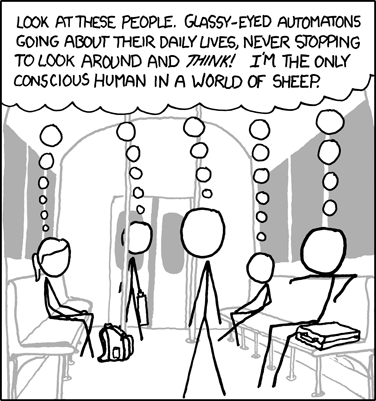
Sheeple in the Year of the Sheep: Illusion and Illumination


Mainly in Asian countries and communities, 2015-2016 is the year of the Sheep, according to the Lunar calendar. Image Source: CNN.

How do we see Sheeple in the Year of the Sheep? Does the Lunar New Year's conciliatory message resolve the trend toward Millennial alienation, conflict and aggression? Can the values of Asia's Year of the Sheep or Goat, such as pacifism, collective action and creativity, ease the tensions caused by western gnosticism? In yesterday's post, I outlined how gnostic beliefs provide the background "social pathology of the political religions." Gnosticism built the central myth of our time: the four-fold Enlightenment illusion of rationalism, of higher knowledge through conflict, of control of the nature, and of human power over the earth. In today's post, I consider the Lunar New Year's symbols as a solution to this problematic myth, despite the fact that 'sheeple' are ridiculed by today's gnostically-minded.

Image Source: Pyramids and Sheeple.


Image Source: Seeking Alpha.

Image Source: Democratic Underground.

Image Source: Red Pill.

Image Source: XKCD.

"Making XKCD slightly worse." Image Source: Simon Software.