TIMES, TIME, AND HALF A TIME. A HISTORY OF THE NEW MILLENNIUM.
Comments on a cultural reality between past and future.
This blog describes Metatime in the Posthuman experience, drawn from Sir Isaac Newton's secret work on the future end of times, a tract in which he described Histories of Things to Come. His hidden papers on the occult were auctioned to two private buyers in 1936 at Sotheby's, but were not available for public research until the 1990s.
Venera 3 did not gather information due to a malfunction, but it still made history when it crashed into the planet's surface on this day in 1966. Image Source: NASA.
Today is the 50th anniversary of Venera 3's crash landing on Venus on 1 March 1966. Venera 3 was the first human-made object to make an impact on another planet's surface. The site Russian Space Webgives a great chronology and details of the development of Russian rockets and space programmes from their earliest days.
See my earlier post on Russian space art, here. The 2004 BBC television series, Voyage to the Planets, depicted what a manned mission to Venus would look like (previously mentioned in this post). On 17 November 2015, Ars Technica reported that the Russians and Americans are going to cooperate to explore Venus with landers in the 2020s:
After more than a year on ice due to Russia’s aggression in Ukraine, NASA and Russia’s Space Research Institute has resumed discussions about a joint exploration mission to Venus, which could include a lander. NASA hasn’t flown a mission dedicated to Venus since its Magellan probe, from 1990 to 1994, which mapped 98 percent of the planet at a resolution of 100 meters or better.
So far NASA has only committed to talking with Russia about its Venera-D mission, which could launch in the 2020s. The space agency has agreed to perform a year-long feasibility study and several meetings during the next year. After that time NASA and Russia’s Space Research Institute, or IKI, will decide whether to continue its partnership, according to a report in Spaceflight Now.
For more information on the planned Venera-D mission, see here, here, here, here and here.
BBC Four's show, The Art of Gothic: Britain's Midnight Hour(6 November 2014) explained how the 18th and 19th century explosion of science and industry inspired a Gothic counter-movement, a critical moral debate on the implications of unbridled rationalism. The BBC show highlighted the English painting, An Experiment on a Bird in the Air Pump (1768) by Joseph Wright of Derby (1734-1797), which portrayed the Gothic fear of scientists' experiments. Rationalists' destruction of spiritual concerns created horror. In the painting, the scientist is slowly pumping air out of a bell jar, in which a bird (symbolizing the Holy Spirit) is trapped. The scientist is suffocating the bird to demonstrate its dependence on oxygen. Image Source: Wiki.
The Awaken the Amnesiacsseries on this blog explains why and how the human interaction with high technology is taking on spiritual dimensions. In today's post, I discuss the Gothic moment at which undue rationalism carries within itself the seeds of its own undoing. The rational, when overindulged, becomes anti-rational.
Any undertaking, done in the name of 'cutting edge change' will involve a confident, progressive agent. It is easy to criticize our forebears for their blind spots, and more difficult to see our own. In an earlier post, The Night of First Ages, I quoted an adaptation of Joseph Conrad's Heart of Darkness (1899) in the 2005 King Kongscreenplay. The characters in King Kong are on a voyage to make a movie on a remote island. On the way, Jimmy, the ship's boy, reads Heart of Darkness, narrated by Conrad's protagonist, Charles Marlow. Marlow is on a journey to find an ivory trader, Kurtz, on the Congo River. Jimmy asks: "Why does Marlow keep going up the river? Why doesn't he turn back?"
The ship's first mate remarks that Marlow keeps searching for Kurtz, without realizing how deep he is getting into the dark side of human nature, because Marlow believes he is civilized. 'Civilized' characters like Marlow and Kurtz are amnesiacs, who think their own savagery is no longer a threat, something from a long lost, bygone era of sticks and stones. In their hubris, they unconsciously become more savage as they push forward as self-appointed bearers of 'progress': "We could not understand because we were too far ... and could not remember ... because we were traveling in the night of first ages ... of those ages that are gone ... leaving hardly a sign, and no memories. We are accustomed to look ... upon the shackled form of a conquered monster ... but there ... there you could look at a thing monstrous and free."
Jimmy realizes, "It's not an adventure story ... is it Mr. Hayes?" To which the first mate responds, "No Jimmy, it's not." The nested novel-to-movie-to-film metafiction in King Kong should be a message to its audience; as is the metahistorical fact that Heart of Darkness was based on a true story and the character Kurtz was based on a real person. The metafiction and metahistory of Heart of Darkness,embedded insideKing Kong, reveal our amnesia. In blindly pursuing the singularity, why don't we turn back? Why don't we see that the history of the new Millennium is not an adventure story? It is because we expect the monster inside ourselves to be shackled. On the Internet and in research labs, the monster is not shackled.
Scientists and technologists have reached a Gothic moment because there is a gap between their practice and the way they are perceived in mass media as progressive actors. When they work with the scientific method, they live with uncertainty. They test hypotheses which, if proven, are accepted until falsified or refined. At the same time, we live in a period when a cult of secular rationalism has supplanted mass religions to furnish the prevailing story of global civilization. Scientific method and rationality are equated with humanism, enlightenment, advanced education, and hyper-progress. Scientists and technologists occupy exalted social positions as perceived experts. In this capacity, they are less cautious. They are little aware that when they become public gurus or market their findings with mythical labels, they tap into that part of secular rationalism that functions like a religion, rather than a considered quantification of reality.
Despite recent triumphs and headlines, there are signs of amnesia among today's scientists, technologists, and technophiles. They press ahead as experts and progressive actors, even when their impact on society starts to become surreal, or when their followers become cultish. They do not stop to reconsider their position, even when, as I put it in this post, "a nearly-unstoppable faith in, and optimism about, rampant technology" gives rise to "a heart-tearing soul-sickness which emerges from that intermingling of the virtual and the real."
Scientists are frank about how much they do not and cannot know. The Guardian: "It is perhaps a sign of the health of modern science that the harbingers of so much doubt have met with such acclaim." The current situation is serious: physicists have reached the analytical limits of scientific inquiry for two reasons. They discovered that they can only observe and measure the tiny part of the universe which absorbs light radiation. When they do measure that tiny portion, they have confirmed that they change it at the sub-atomic level. We can only see a tiny portion of reality, and we change that reality when we look at it. Together, these issues trap us in a self-referential bubble of perception.
"Let me start by saying that I am going to discuss the universe only from the perspective of a scientist, from an intellectual perspective. I am not going to be talking about whether there is spiritual God or a personal God or a purpose to the universe – these are questions that scientists can’t address. My own belief is that once you have the laws of physics the universe just keeps going on its own. And it could even be that the laws of physics are all that you need in order to get the universe to start from the very beginning – the “Big Bang”. ...
The Higgs boson helps to complete what is called the Standard Model of particle physics. There is a way we have to try to understand – electrons and quarks and neutrino and other kinds of particles. And Higgs boson was kind of a missing piece of the puzzle. Which, if it were not there, would mean that we would have to kind of start over. But the fact that it appears to have been found completes our picture of the Standard Model of particle physics. That is not to say that we understand everything. We don’t yet understand how gravity fits in with particle physics. Other than the fact that gravity pulls particles together. We also do not understand things like dark energy. The universe seems to be filled with a dark energy that is expanding the universe faster and faster – I helped to discover that. And the 2011 Nobel Prize in physics was given to the team leaders last year for that discovery.
So, we don’t understand the dark energy. There is also something called dark matter. It may or may not be some kind of fundamental particles that could be part of the Standard Model – we don’t yet understand. The Higgs boson is a very important discovery. But it does not solve all the questions that remain in physics. But it is a very important discovery. In a sense, it would have been more exciting as a scientist to me if it were not there because it would mean that we were not correct in our view of the universe. The surprises are more fun than the expected discoveries. ...
I don’t think scientists will ever truly understand creation because I don’t think we will know where the laws of physics came from. But given a universe, given a universe can arise I think some day we may well understand dark energy and dark matter and the other constituents of the universe. We only discovered dark energy 14 years ago – the accelerating expansion of the universe. So it is no surprise that we don’t yet fully understand dark energy. Dark matter was only conceived a few decades ago. So again, we don’t yet fully know what dark matter is. But we have not been investigating it for very long. I mean, in hundreds of years who knows what we will know. We might have a full inventory of what is in the universe and how everything behaves. So we will know a lot. But we won’t quite know why it all happened and why there is something other than nothing.
Why are there any mathematical laws of physics rather than just nothing at all? I don’t know whether we will ever understand that. Scientists are only well-aware of 4 per cent of the universe – that is, we understand pretty well the nature of 4 per cent of the universe. The stuff that is made of atoms. Ninety-six per cent of the universe is made out of dark matter and dark energy. And although we know they are present we don’t know what their detailed properties are or why they are there. Or what exactly is going on."
On the other side of the line stand theoretical physicists, who deal with unmeasurable unknowns using mathematics. Astrophysicists stand, somewhat unhappily, on both sides of the line. A 2011 book by Richard Panek, The 4 Per Cent Universe, emphasized that scientific measurements begin to break down at dark energy and dark matter. The conventional wisdom is that as discoveries, knowledge, and tools improve, the scientific method will expand and continue. But this underestimates the problem of scientific methodological analyses - and for researchers in all disciplines who use them. It is not just a question of having insufficient tools to measure and quantify reality. It is a question of not being able to comprehend the findings. The Smithsonian: "'We have a complete inventory of the universe,' Sean Carroll, a California Institute of Technology cosmologist, has said, 'and it makes no sense.'"
Apollo 18(2011) faux found footage movie explained why 'we've never gone back to the moon.' The film was a huge box office hit. The real reasons for canceled Apollo missions were political, technical and funding challenges. Image Source: Movie Blogger.
Where big science stumbled, big tech was supposed to bail us out. In the public mind, if not in reality, the torch passed in the 1990s from big science to big technology. Over the past fifteen years, interest shifted from space exploration and cosmology - to computers, gadgets and the Internet. Technologists promised transhumanism, posthumanism, artificial intelligence, and the Singularity. This was why 'singularity' became the evangelical buzzword of technophiles between 2003 and 2012, and remains fashionable with its own cluster of personalities. Silicon Valley became one of the most powerful places on earth. High tech would launch us exponentially toward a gnostic, mind-opening, theophanic moment of transcendence.
Enter the computer programmers, designers and engineers. We would remake ourselves on the clock, rework our societies and the whole world, and finally efficiently manage resources. The Internet, conceived by the scientists at CERN, was rationalistic in its construction. Unfortunately, it is anti-rational in its execution; it exploits users' unconscious impulses and forms a giant collective mind. We did not get a robot-supported Valhalla. Instead, we got 9-million-hit Roomba cat videos, cyber-bullies, social-media-supported home invasions, remote-controlled brain-to-brain interfaces, and Boston Dynamics cheerfully preparing its Second Variety military hardware for World War III. The technological revolution began to give way to the surveillance revolution.
The world's first flexible smartphone lets you hold and use your mobile phone like an old-fashioned book. Gif source: Engadget.
Recent scientific and high tech headlines struck a positive note, with some discordant undertones. Several cutting-edge experiments create synthetic or mechanical versions of what we already have in organic form, revealing the underlying meta-mentality of researchers. The European Commission's Digital Single Market announced the arrival of the 'Fourth Industrial Revolution' in late January, 2016. In early February, there was a discussion at Quoraabout converting energy into matter: E=mc2 says energy and mass are interchangeable. Are energy and matter states of a same thing? Is matter a rigid form of energy? Great discoveries, such as the possible cure for blindness this week, are beneficial; yet that same desire to overcome physical debilitation, limitations and illnesses becomes problematic in other examples, as when parents assert the right to edit their children's genes.
The flood of news in such a short amount of time reveals vast resources diverted to these spheres, with very little to no resources comparatively devoted to putting this work into human perspective. The headlines show how difficult it is to keep track of the explosion of innovations on an ongoing basis; and they reveal how necessary it is to do so (hat tips: Engadget,ErekAlert,Graham Hancock):
Quartz (3 February 2016): Germany is getting closer to nuclear fusion—the long-held dream of unlimited clean energy
BBC(11 February 2016): Einstein's gravitational waves 'seen' from black holes
BBC(11 February 2016): Why you really should get excited about gravitational waves
Engadget (12 February 2016): Watch DARPA's tiny drone do 45 MPH indoors, autonomously ... and then crash into countless expensive pieces
Independent(13 February 2016): Chinese nuclear fusion scientists achieve temperatures three times hotter than the sun
The temperatures were roughly equal to a 'mid-sized thermo-nuclear explosion'
Guardian (14 February 2016): Race is on for next breakthrough as physicists target dark matter: Scientists from South Dakota to Australia seek material believed to make up quarter of universe as researchers in China investigate another mystery particle
University College London / EurekAlert (15 February 2016): Virtual reality therapy could help people with depression: "Patients in the study wore a virtual reality headset to see from the perspective of a life-size 'avatar' or virtual body. Seeing this virtual body in a mirror moving in the same way as their own body typically produces the illusion that this is their own body. This is called 'embodiment'. While embodied in an adult avatar, participants were trained to express compassion towards a distressed virtual child. As they talked to the child it appeared to gradually stop crying and respond positively to the compassion. After a few minutes the patients were embodied in the virtual child and saw the adult avatar deliver their own compassionate words and gestures to them. ... 'People who struggle with anxiety and depression can be excessively self-critical when things go wrong in their lives,' explains study lead Professor Chris Brewin (UCL Clinical, Educational & Health Psychology). 'In this study, by comforting the child and then hearing their own words back, patients are indirectly giving themselves compassion.'"
Engadget (15 February 2016): Johns Hopkins grows tiny brains in petri dishes for lab testing: "Most new drugs tested on mice don't work on humans, because we're 'not 150-pound rats,' says Johns Hopkins' Bloomberg School's Dr. Thomas Hartung. He and his team believe the 'mini-brains' they've designed and grown in the lab are better test subjects for drug development, since they're derived from human cells. These mini-brains are truly tiny at 350 micrometers in diameter, or about the size of a housefly."
PhysOrg (15 February 2016): No more keys or cards? Technology goes under the skin
Guardian(15 February 2016): Cancer researchers claim 'extraordinary results' using T-cell therapy ‘This is unprecedented’ says researcher after more than half of terminally ill blood cancer patients experienced complete remission in early clinical trials
Guardian(16 February 2016): WHO paves way for use of genetically modified mosquitoes to combat Zika: Consequences of Zika outbreaks could be ‘staggering’ says WHO as it advocates further trials and assessments for controversial mosquito control techniques
Ars Technica (16 February 2016): The NSA’s SKYNET program may be killing thousands of innocent people: "Ridiculously optimistic" machine learning algorithm is "completely bullshit," says expert: "Last year, The Intercept published documents detailing the NSA's SKYNET programme. According to the documents, SKYNET engages in mass surveillance of Pakistan's mobile phone network, and then uses a machine learning algorithm on the cellular network metadata of 55 million people to try and rate each person's likelihood of being a terrorist."
Engadget(16 February 2016): Doctors reveal they can 3D print body parts and tissue
Sky News(16 February 2016): 'Extraordinary' Cancer Breakthrough Revealed: Terminally ill patients are left symptom free after treatment with modified cells - described as a "potential paradigm shift"
Discovery News(16 February 2016): Hawking: Gravitational Waves Could Revolutionize Astronomy
Engadget (17 February 2016): Flexible smartphones may be coming sooner than you think
EurekAlert(17 February 2016): DNA evidence shows that salmon hatcheries cause substantial, rapid genetic changes
EurekAlert (17 Feburary 2016): New predictor of cancer: When your biological age is older than your chronological age, the risk of getting and dying of cancer rises
EurekAlert (17 February 2016): Progress toward an HIV cure highlighted in special issue of AIDS Research and Human Retroviruses
Yahoo (17 February 2016): The Hubble Space Telescope Just Snapped Photos of the Biggest Black Hole We've Ever Observed: "So how big is it, exactly? Well, according to our best estimates, the supermassive black hole is roughly 21 billion times the size of the Sun, and its event horizon (an area so dense and powerful that light can’t escape its gravity) measures 130 billion kilometers in diameter. That’s about 15 times the diameter of Neptune’s orbit around the Sun, according to scientists at the Hubble Space Telescope."
PhysOrg (18 February 2016): Five-dimensional black hole could 'break' general relativity: "Ring-shaped black holes were 'discovered' by theoretical physicists in 2002, but this is the first time that their dynamics have been successfully simulated using supercomputers. Should this type of black hole form, it would lead to the appearance of a 'naked singularity', which would cause the equations behind general relativity to break down. The results are published in the journal Physical Review Letters."
Guardian (18 February 2016): Robots could learn human values by reading stories, research suggests. Scientists have been running tests where artificial intelligences cultivate appropriate social behaviour by responding to simple narratives
Baltimore Sun (18 February 2016): Woman's blindness apparently reversed by stem cell treatment
Economist (20 February 2016): Wireless: the next generation. A new wave of mobile technology is on its way, and will bring drastic change
Daily Mail (20 February 2016): Earth really IS special: None of the 700 million trillion planets in our known universe are similar to our own, study finds
HuffPo (20 February 2016): Lost Tapes Reveal Apollo Astronauts Heard Unexplained ‘Music’ On Far Side Of The Moon. "If you’re behind the moon and hear some weird noise on your radio, and you know you’re blocked from the Earth, then what could you possibly think?"
Science Alert (22 February 2016): NASA researchers are working on a laser propulsion system that could get to Mars in 3 days. "There is no known reason why we cannot do this."
Wired (22 February 2016): Nasa's laser-powered engine could get us to Mars in 72 hours (if it works)
Reuters (22 February 2016): Brazil to fight Zika by sterilizing mosquitoes with gamma rays
Science Daily (22 February 2016): Bat 'super immunity' could help protect people
PhysOrg (22 February 2016): Study shows plants appear able to forget memories when they are not useful
Science Alert (23 February 2016): NASA has been inundated with a record number of astronaut applications. Real-life space cadets
Space.com (23 February 2016): Plans Being Devised for Human Outpost Near the Moon
Discovery News (23 February 2016): Self-Driving Flying Car to Take Off in Two Years
Nature (23 February 2016): Should you edit your children’s genes?
ErekAlert (23 February 2016): DNA 'Trojan horse' smuggles drugs into resistant cancer cells
ABC News (23 February 2016): Vaccinating wildlife with GM viruses could stop diseases jumping to humans, scientists suggest
Engadget (23 February 2016): Boston Dynamics presents the 'next generation' Atlas robot. Google's humanoid robot-builders have created a version that's smaller, lighter and more agile
In the quest to store information permanently, the University of Southampton has developed a memory chip so durable that it will last until after our sun burns out:
Using nanostructured glass, scientists from the University’s Optoelectronics Research Centre (ORC) have developed the recording and retrieval processes of five dimensional (5D) digital data by femtosecond laser writing. ...
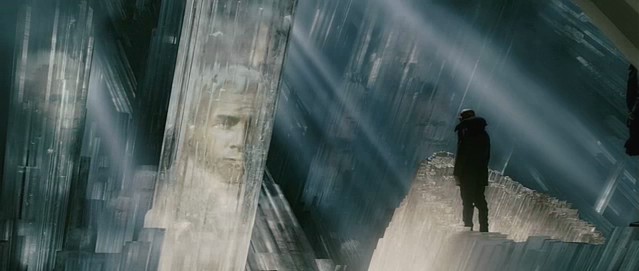
Coined as the ‘Superman memory crystal’, as the glass memory has been compared to the “memory crystals” used in the Superman films, the data is recorded via self-assembled nanostructures created in fused quartz. The information encoding is realised in five dimensions: the size and orientation in addition to the three dimensional position of these nanostructures.
Professor Peter Kazansky, from the ORC, says: “It is thrilling to think that we have created the technology to preserve documents and information and store it in space for future generations. This technology can secure the last evidence of our civilisation: all we’ve learnt will not be forgotten.”
In a related report from 17 February 2016, Engadget revealed Southampton's curious mixed impulse toward the ultra-new and ever-permanent:
Researchers at the University of Southampton's Optical Research Center announced on Tuesday that they've perfected a technique that can record data in 5 dimensions and keep it safe for billions of years. The method etches data into a thermally stable disc using femtosecond laser bursts. The storage medium itself holds up to 360 TB per disc, can withstand temperatures up to 1000 degrees C and are estimated to last up to 13.8 billion years at room temperature without degrading.
Each file is comprised of three layers of nanoscale dots. The dots' side and orientations, as well as their position within the three standard dimensions, constitute its five dimensions. These dots change the polarization of light travelling through the disc which is read using a microscope and polarizer.
"It is thrilling to think that we have created the technology to preserve documents and information and store it in space for future generations," Professor Peter Kazansky from the ORC said in a statement. "This technology can secure the last evidence of our civilisation: all we've learnt will not be forgotten."
To make their research accessible to the public, scientists exploit popular culture and so must not complain when the masses comprehend science with pseudoscientific labels and mystical weirdness. Tagging this memory chip with fifth dimensional capabilities shows the University of Southampton's media-savvy, and they have asked us to respond with one big "quantum wow." Anything in '5D' is incredibly popular right now; it is a pseudoscientific catch phrase, like 2016's anti-ageing creams, which claim to work by altering your DNA. Invoking the fifth dimension in a press release alludes to a gnostic vault up to a supra-spiritual existence. 5D is a loosely-grasped point of perspective, above regular three-dimensional reality and the fourth dimension of spacetime. I have previously alluded to 5D concepts here, here, here and here.
Southampton's optics researchers do not show much interest in the deeper meaning of durable memory, of what it means to preserve knowledge until after our sun burns out. If they knew anything about the Superman story, they would understand that crystallized memory implies a push beyond the normal human capacity to remember, toward the alienated superhuman, into the moral and physical challenges of permanent isolation.
This blogasks how we can record and write history in the new Millennium, given the volume of information, the ephemeral nature of the World Wide Web (evident in link rot and dead Websites), and the problem that data and authorship can be changed. There is an additional problem of interpretation of data. From my blog's statement of intention:
"This blog is an experiment in writing real-time history, which deals with the impact of digital communications on our understanding of history. There are serious problems emerging in social media, in which opinions are confused with facts, data and sources are available but potentially manipulated, and historical interpretive authority derives from hit counts and technical algorithms determining audience traffic. These problems demand an ongoing and increasingly rigorous reappraisal of historical method and historiography, to take into account the impacts of online behaviour and virtual perception."
Orwell promised that the destruction of history, information impermanence and propaganda manipulation rely on and reinforce two conditions: first, psychological authoritarianism, a precondition for real world totalitarianism; and second, the centralization of information. Orwell's protagonist, Winston Smith, addresses his secret diary to any reader who is free from the past or future: "To the future or to the past, to a time when thought is free, when men are different from one another and do not live alone — to a time when truth exists and what is done cannot be undone."
If there is no correction in the current state of affairs, our impermanent Web threatens to become aggressively anti-historical and ensure frightening Orwellian outcomes. This is why open source coders, hackers and independent designers are trying to think about the Web in a new way. They want to redevelop it to create two results: first, they want to build a permanent Web, where all files and information are perpetually recorded, maintained, encrypted, public, and protected; second, they want to decentralize, and then distribute, big data power. That would allow future generations to question any information presented as historical facts. With a permanent, decentralized Web, anyone in the future will be able to check the archived data for themselves, no matter who they are, and no matter where they are.
This new possibility is appearing in the cryptocurrency and peer-to-peer technology spheres, through mergers of cryptocurrency technology with a collaborative information protocol called Interplanetary File System, also known by its acronym IPFS. (IPFS is not to be confused with Google's Interplanetary Internet Protocols, which are being designed at NASA for Mars colonization; I first blogged about InterPlaNet in 2011, here.)
I want to thank Chris Ellis for bringing IPFS to my attention. Ellis is a great, original thinker in the Bitcoin industry and founder of ProTip and the Fullnode Project. His technical and philosophical meditations on the combination of a new Web network protocol with cryptocurrencies enabled me to think of their broader implications in historical terms. You can see my 2014 interview with Ellis here; my earlier discussion on Bitcoin crowdfunding of creative and intellectual projects with Protip is here.
After talking to Ellis, I wondered if a distributed, permanent historic archive heralds as big a shift as did the historic separation of church and state. Over the past decade, the Internet has shaken nation-states to their foundations. There are many examples of mass protests sparked by social media, notably in 2011 in Tunisia and Egypt (see related posts here and here). Anti-corruption activists such as Alexey Navalny test the weak spots in the authority and apparatus of the Russian state with live online broadcasts to a global community of real-time witnesses. For a recent example, see Navalny's crowdfunding campaign to develop live camera feeds at intersections and prevent roadside police intimidation, here. Global communications naturally erode nation-state divisions.
However, we have entered a new stage in this trend. It is fascinating to consider that the manner in which information is organized and communicated determines its durability, and its political and governmental impact, over time. Our current Web is impermanent and builds addresses associated with nation-states or centralized organizations. IPFS builds cryptographic addresses associated with the information at the address. It is 'content-addressed,' not nationally-, corporately- or institutionally-addressed. That change builds a distributed information network, which might decouple the nation from the state, and remake states into entities with no geopolitical identities. The alternative is 'techno-community-states' of various types.
For an example, see the Twitter hashtag #BlockchainsNotBorders, dominated by the project, BitNation: "Welcome to Governance 2.0: Borderless Decentralized Voluntary." On 19 February 2016, BitNation released the world’s first 'virtual nation' constitution on top of the blockchain of the cryptocurrency Ethereum. Altcoin Todaysampled the anarcho-capitalist libertarian rhetoric associated with this project's separation of nation and state:
By using borderless technology in the form of smart contracts, BitNation wants to remove geographical apartheid of individual nation states. Doing so will lead to governance services that are more transparent, cheaper, and overall better for the end user.
The concept of do-it-yourself governance may seem strange to some people, but the BitNation team is very confident in what they are trying to accomplish. While there is still a lot of work to be done before DIY governance becomes a mainstream trend, the team is currently focusing on security and dispute resolution. Ethereum smart contracts will play a big role in his department, according to BitNation founder Susanne Tarkowski Tempelhof.
What makes these Ethereum smart contracts useful is how they bring a new layer of decentralization to the world. Unlike most services being used today, such as social media and email, BitNation’s governance 2.0 will not involve central authorities or governments. Needless to say, this model of governance is completely different to the centralized system of representative democracy most of the Western world is accustomed to.
Tempelhof feels that democracy is a massive failure, and the concept is – according to her – fundamentally flawed. Democracy as most people know it means governments give residents a variety of choices to vote on, without them having a say in the matter of what choices are offered. BitNation wants to change this by introducing democratic autonomous organizations (DAOs).
This concept needs some further explaining, however, as these Democratic Autonomous Organizations exist entirely on the Ethereum blockchain. From a governance point of view, decisions will be made by a group of parties who can decide on contracting people to do work, distributing assets, and even appointing shares. Two significant examples of a DAO can be found in Slock.it and DigixDAO. ... Tempelhof explained it as follows:
‘Decentralized’ means there is no single point of failure, like there is no central bank. If you look at Uber for example, they have got into trouble in Europe, they have been banned in France – but if Uber had been a DAO there would have been no bank accounts to freeze, nothing for regulators to ban. Decentralized also means personal autonomy. We decide what we do. Nobody tells us. And being borderless means that we are not confined by a passport to live in an area of war or famine. That’s as wrong as judging people on the color of their skin or sexual preference.
Another 'Governance 2.0' report from last year was entitled, Bitnation, Horizon and Blocknet join forces to deliver the world’s first platform for do-it-yourself governance services to 2.5 billion people across developing markets, using Bitcoin 2.0 technology (13 March 2015):
Bitnation, which is known mostly for its groundbreaking pilots including organizing the world’s first Blockchain Marriage and the world’s first World Citizenship ID on the blockchain, which has drawn attention from, amongst others, Wall Street Journal, Forbes, TechCrunch, Wired, and The New York Times. Bitnation aims to provide governance services in frontier and emerging markets, where it is needed the most. There are 2.5 billion unbanked in the world, the “System D” economy – the grey, unregulated markets – is a 10 trillion dollar economy, and 80% of the world’s population currently live in developing markets. Bitnation’s Founder and CEO, Susanne Tarkowski Tempelhof, worked for 7 years in challenging frontier environments, like Afghanistan, Egypt, Libya and other countries, primarily with assessing people’s perception and experience of governance.
After the BitNation announcement that you can 'Create Your Own Nation in 140 Lines of Code,' performed in an online live event from an Irish pub in Rio de Janeiro, Brazil on 15 February 2016, one could step back and consider Orwell again. Nineteen Eighty-Four asked how the individual's heart and soul could survive inside a totalitarian state. Orwell also pondered how information systems helped to construct, and were thereby reflected in, the governmental structure employed by political authority. In Nineteen Eighty-Four, the two questions are intimately related. It is through systems of emotions, morality, thought and communications that we bind mentalities to power. This is why where once religion dominated the God-sourced monarchical state, the disciplines of history, philosophy and politics replaced religion in the era of the secular nation-state.
Of those three modern disciplines, aspiring technocrats have fixated on politics to develop their visions of 'techno-community-states.' But when history and philosophy are absent or only superficially considered, politics fares poorly in shotgun weddings with technology. We need all three disciplines together, and the help of other fields, to understand how tech-communities might be defined and connected to statehood, if at all. Chris Ellis, in conversation, preferred not to label the new permanent Web politically. His priority is to put "the technology into people's hands so that they get to have a say. Everyone gets their own narrative now. [And] it will be irrefutable that someone said [what they said]." He believes that it is better to allow time to tell whose narrative ends up being correct, rather than forcing older political theories onto the current evolution of the technosphere and its unprecedented circumstances and possibilities.
That is only partly true, because future truths don't spontaneously manifest themselves. There are always present-day conflicts to find a dominant narrative, and future corrections can be very difficult. Future historians will be actors who will help to decide which narrative ends up being 'correct' - in the sense of being the closest reflection of our Millennial reality, while also being relevant to future considerations - and for how long. But what is at least promised now, is that there actually will be future historians to make those analyses, as opposed to Winston Smiths, working in the Records Department of a future Ministry of Information. These are the overarching questions to the technical overview that follows; those questions will be explored in subsequent posts in this series on the Permanent Web.
The explanation on Ethereum starts at 2:25; the discussion on IPFS starts at 4:26; from The Daily Decrypt interview with Ethereum Director of Integration Taylor Gerring (26 January 2016). Gerring emphasized that Ethereum allows users to develop applications which sit on the cryptocurrency's blockchain. Video Source: Youtube.
In the January 2016 video above, The Daily Decrypt interviewed Ethereum cryptocurrency dev Taylor Gerring to explain what Ethereum is and how it might be combined with IPFS to build and incentivize a permanent Web. All data on IPFS are perpetually recorded online by means of peer-to-peer network distribution; and every single subsequent change to a given file is also permanently recorded by means of the amended file acquiring a new encrypted addresses, which can be indexed by a blockchain. This IPFS combination with cryptocurrency technology would establish a standing historical archive of online information. The encrypted addresses for any piece of information would ensure that that information could not be manipulated without the manipulation being noted in another encrypted process. Proponents in the open source coding community claim that this combination will build a new Web to function as the Web should have, from the start.
A surprise Valentine's post was inspired by a search on computer hackers and Julian Assange's latest media scrum. Some days, writing the cultural history of the new Millennium is like being on a game show. Do a search on a random topic and find a giant world mushrooming behind the label. "What's behind Door Number 6, Bob?" Then you look, and you're sorry you did.
Today, behind Door Number 6, we find Indigo Children. This is one of those 1970s' Baby Boomer spiritual entertainment franchises which got out of control and has now created a New Age revolution in parent-child consciousness. With apologies to all those who positively self-identify as Indigo Children, the term came from books written by three Silent Gen and Boomer authors: Nancy Ann Tappe, Jan Tober, and Lee Carroll. In the late 1960s and early 1970s, Tappe combined visual arts colour theory with eastern spiritual ideas about coloured chakras and auras. She claimed that a new type of people were appearing on the planet, and their indigo-coloured auras revealed their soul missions. Sometimes, they were infused with alien spirits from the stars; either way, they were meant to change the world with superhuman psychic abilities. This was a profitable mash-up of many ideas from that time, and adapted the egomania of the Me Generation.
The Indigo Child combined the 1970s' extra-sensory perception fad with space aliens (a quasi-futuristic update of Roman Catholic demonology), sexual liberation, angel worship, New Age occultism, Wicca, and environmental eco-faith. In Tappe's mythos, Indigo people now walking the earth were and are on a gnostic spiritual path. Tappe warned that as heralds and iconoclasts of the Age of Aquarius, Indigo Children might be hard to take!
Top Indigo Characteristics:
Brilliant with technology
Relaxed and casual
Peer-oriented
Love junk food
High energy
Bored in school and easily distracted
Multi-task effortlessly
Blunt in communication
Unswayed by previous social norms
View entitlement as a right
Androgynous
Indigo Children were and are rebellious non-conformists, but we have to forgive them for it, since they are destined to unite us all in peaceful, loving understanding of ever-broader realities and dimensions of existence. From Tappe's Website:
Indigos is a label associated with recent generations of individuals born around the globe. They were originally seen and identified by Nancy Ann Tappe (1931-2012) as a part of the color system which evolved from her synesthetic perceptions. Nancy's lifetime work with the science of color has persuaded her and thousands of others that color is one language that can be used to distinguish and identify elements of the human personality.
Indigos bring change to every level of the human experience through their universal task: to globalize humanity through technology. Their energy today is constantly changing and fast, almost hyperactive. Technology is an innate talent and skill for them; cellphones are an extension of their body.
There are four groups or types of Indigo: Humanists, Artists, Conceptualists, and Catalysts. ...
Indigo was only one of twelve life colors that Nancy Tappe has seen her entire life in the human electromagnetic energy field. Originally Nancy saw eleven colors, but that changed in the late 1960's and early 1970's when she noticed another color among infants. She called it indigo, a color between blue and violet in the color spectrum. It took her forty years to identify and clarify consistent patterns of Indigo behavior and influence. Her information system about life colors came from her study of color and the human personality.
Over the subsequent decades, the idea of Indigo Children influenced the Boomer credo that their children were special, unique and gifted. This was particularly the case if the children suffered from learning disabilities or behavioural problems, many of which had been newly conceptualized as well.
For Gen X parents, Indigo Child spiritual parenting techniques have evolved as part of so-called 'meta-gifted education.' Little did Tappe realize that the Me Generation's ego worship would create a new generation of people who worshipped their own souls, to become demi-gods in the new Millennium's online spiritual explosion. In March 2012, Crackednumbered Indigo Children among one of the "five creepiest progressive parenting fads": "Declaring Bratty Kids to Be Magical Superhumans." Indigo Children inspired a film in 2012 and resonates strongly with people who have grown up with, and are living much of their lives in, the dream spaces of virtual reality.
Anonymous Message to the Indigo Children of the world (28 January 2015). Video Source: Youtube.
None of this has escaped the attention of computer hackers, who spend a lot of time online and know virtual cultures well. In 2015, an Anonymous hacker posted a video with a proposal to Indigo Children. "Look, you Indigo Children [girls]," the hacker said, "it's time for us to join forces." From the video description:
"Attention Indigo, crystal, and rainbow children of the world. Greetings from anonymous. We are contacting you today as there are those who say you and those like you are here to usher in the new era. An era of peace and enlightenment. It has been said you are here to challenge the tyranny that has so long plagued our world. To rise up against injustice and make way for a new, harmonious world.
However, the planet seems to be going in the other direction. Corporations have corrupted nearly every government in the world. Our politicians our controlled by money. The people who are sworn to protect us are now beating and killing us. Greed and indifference are glorified while generosity and tolerance are mocked. The media are nothing more than pawns in a world where our fundamental right to knowledge and expression are being censored. Children are starving in the streets. The elderly are homeless, cold and hungry. Things are only going to get worse.
the time for talking is over. It is time for action. No longer can we turn a blind eye to uncensured greed and corruption. No longer can we afford the luxury of not paying attention to the world around us. Our futures, and our childrens futures depend on it. We must act now. We must take to the streets, we must take to the internet. We must let the powers at be know that this is our world and will will not sit idly by as they enslave and destroy it.
Many believe Anonymous is nothing more than a group of hacker activists. This is not exactly true. Anonymous is not a group or organization per say. There is no central leadership. There is no membership. There is no one sole purpose behind our actions. Rather, we are a movement. An idea. We are everyone and we are no one. We are anyone who wishes to stand up against injustice. We are the passerby who records police brutality on their phone. We are the reporter who exposes a corrupt politician, we are your friend that constantly posts activists posts and news stories on social media, we are the protesters in the streets and, yes, sometimes we are the hackers taking down terrorist websites. We believe that the indigo children can add greatly to our movement. To help us achieve a better world for everyone. Join the cause today."
I suspect this has less to do with toppling the Illuminati and more to do with getting laid. This goes to show that no matter how crazy the crazy gets, nature finds a way. But it's not going to be that easy (the follow-up video is here). One Indigo girl who commented on the Anonymous guy's video was skeptical:
"I am indigo and I get a negative vibe from them. Its like they are the face of what right sounds like but isn't. The change is not about fighting. It's about loving. Indigo children are free spirits. They do not have one solid belief or group or thought for which they support. They simply act on what feels right inside. I am suspicious of this post. Police brutality isn't even a major issue. There's brutality everywhere in every race and occupation in the world. There is nothing wrong with police or blacks or whites. We as a people are the problem. we each have two wolves. one of love and one of hate. the one that wins the fight is the one you feed. stop labeling police and groups and people. take self responsibility and stop encouraging the media. treat each negative case as an individual issue. stop playing victim. do not wine because the milk has spilled. feed it to the cat so that you can save a days worth of cat food and in turn a days worth of money. see the positive and feed the positive."
Perhaps Indigo Children should just lie back, close their third eyes, and think of England. More likely, the hackers will be ensnared in their Indigo lovers' harrowing spiritual awakenings and ascensions to the fifth dimension of existence.
Congratulations and props to Thomas Haller Buchanan, who crowdfunded USD $19,343 on Kickstarter in January 2015 to publish his book of art and illustrations, Facts. Figures. Fantasies. His book arrived today in the mail. Thom was valiant through the whole huge journey, starting with the funding campaign, when some big backers pulled out at the last minute. On Kickstarter, if you do not meet your goal, you lose all pledges. Other donors stepped in to ensure the campaign was successful and Thom's sketches and personal story as an artist, along with his finished Pre-Raphaelite- and Art-Nouveau-styled works, saw print. This is what the Internet was supposed to be about.
Your Aquarian blogger is on a birthday break until 20 February 2016. The post featured for the interim on the right-hand sidebar covered the 600th birthday celebration of Prague's astronomical and astrological clock in 2010. The Aquarian season is associated with several festivals which anticipate spring, renewal, and an awakening of the mind after winter's sleep and constrictions. The Gaelic Imbolc, the Celtic Brigid's Day or Saint Brigid's Day, together reflect a fire festival marking the halfway point on 1 and 2 February 2016 between the northern winter solstice and the spring equinox. The Christian Candlemas, a ritual for the purification of Christ's mother Mary on 2 February 2016, is represented in secular form in North America as Groundhog Day (in French Canada, it is known as Jour de la Marmotte). And the lunar new year on 8 February will be observed in Asia in 2016 as the start of the Year of the Yang Red Fire Monkey. You can find your Chinese zodiac sign here, although that gives only the simplest idea of the Chinese astrological system and another calculator is here. The celebrations run until the Lantern Festival on 22 February 2016.
Below the jump, see some tarot Star cards associated with the sign of Aquarius. Leigh McCloskey explains the archetypal message of the Star, which liberates people by encouraging them to consider their smaller values and concerns in terms of ever larger perspectives:
The Star archetype is concerned with the gradual emancipation of personal awareness by offering it a greater field of vision which evolves into a more impersonal or universal understanding of the self and its proper role. Existence begins to be viewed as inclusive rather than exclusive, other people's beliefs, traditions, and religions begin to be seen not as wrong but simply different and appropriate to their needs. This new tolerance ushers in a flow of potential, which was impossible, as long as former emotional patterns and thought structures remained crystallized.
In the Major Arcana deck, the Star card follows the Tower card; the latter symbolizes harsh, rapid collapse, change, and lessons. Thus, the Star card indicates deeper wisdom after trials, disappointments, and hardships, and a phoenix-like light from the ashes. The American film, Groundhog Day(1993) was admitted to the United States National Film Registry as "culturally, historically, or aesthetically significant" in 2006. It depicts the cyclical learning curve and mental and spiritual awakening symbolically associated with this time of year.
Happy Lunar New Year! Come on over to Patreon and Substack , where I am sharing selections from my new novel in progress, Vampire Daddy. ...
CROWDFUND HIGHLIGHTS
Followers
Translate
Tip Jar
Tips always welcome! Please support the blogger.
CRYPTO TIPS
BTC:bc1qn64kr0wr2ste54v300hufqk39ymtmws5rnf0r2
ETH:0x33E14ef754CAdc113A409211fbd6Ea42544aA4A1
For all my crypto wallets, crypto exchange and trade referral links, go here.
Readers Say
"Turns out this was insanely prescient. " (27 Feb. 2025)
"I was [s]truck by the thought that another dominant illusion that bewitches the poor, the r[i]ch, the powerful and the weak equally is that tomorrow will look like yesterday... It is happening again... In so many ways we continue to hold onto past pains, to refu[s]e to look at and truly feel what has happened, to not notice that we act from a place of fear in the face of some distant echo. Nothing will ever be the same." (7 May 2020)
"A haircut is as emblematic of fascism as the Hakenkreuz? That's absolutely ridiculous, good God!" (5 October 2019)
"This was a truly amazing and inspired blog post. I do hope you are able to publish a book that further delves into these cyber resistance and cultural movements. I'd buy it today." (26 December 2017)
"I've shared many of your blogs on my facebook page over the past few years -- I think your blog's one of the best on the internet." (19 October 2017)
"I like your blog. Interesting content. Deep thoughts, well formed and presented." (21 June 2017)
"This blog is a goldmine and a beacon. Deep, clear, multiperspectivist and enlightened. Congratulations." (23 June 2015)
"I'm definitely a lurker. You have the greatest blog on the internet. ... You are a lighthouse." (26 August 2013)


 Posts
Posts